
Garmin eTrex SE
4.2Editor score
Long field-replaceable battery life
Multi-GNSS satellite positioning
Water-resistant IPX7 construction
A hunting GPS handheld gives hunters a dependable way to navigate unfamiliar terrain, mark productive locations, monitor elevation, and travel back to camp without relying on a phone. The most useful models combine accurate positioning, rugged construction, readable maps, long battery life, and controls that remain manageable with cold or gloved hands.
The handhelds in this guide were compared using the specifications supplied for each model, with emphasis on satellite support, display quality, navigation features, ruggedness, mapping, sensor functions, and expected battery endurance. The list covers button-operated units, touchscreen models, compact navigators, premium bundles, and a dedicated ballistic device.
Each review explains where a product stands out and where compromises may matter, helping readers match a device to their hunting style. The three leading choices cover value, versatile performance, and premium capability. Product availability, feature bundles, and prices can change, so readers should confirm current details before buying.
4.2Editor score

4.5Editor score

As an Amazon Associate we earn from qualifying purchases.
This side-by-side comparison highlights the main differences in positioning, displays, mapping, ruggedness, controls, and battery capability across all ten hunting GPS handhelds.
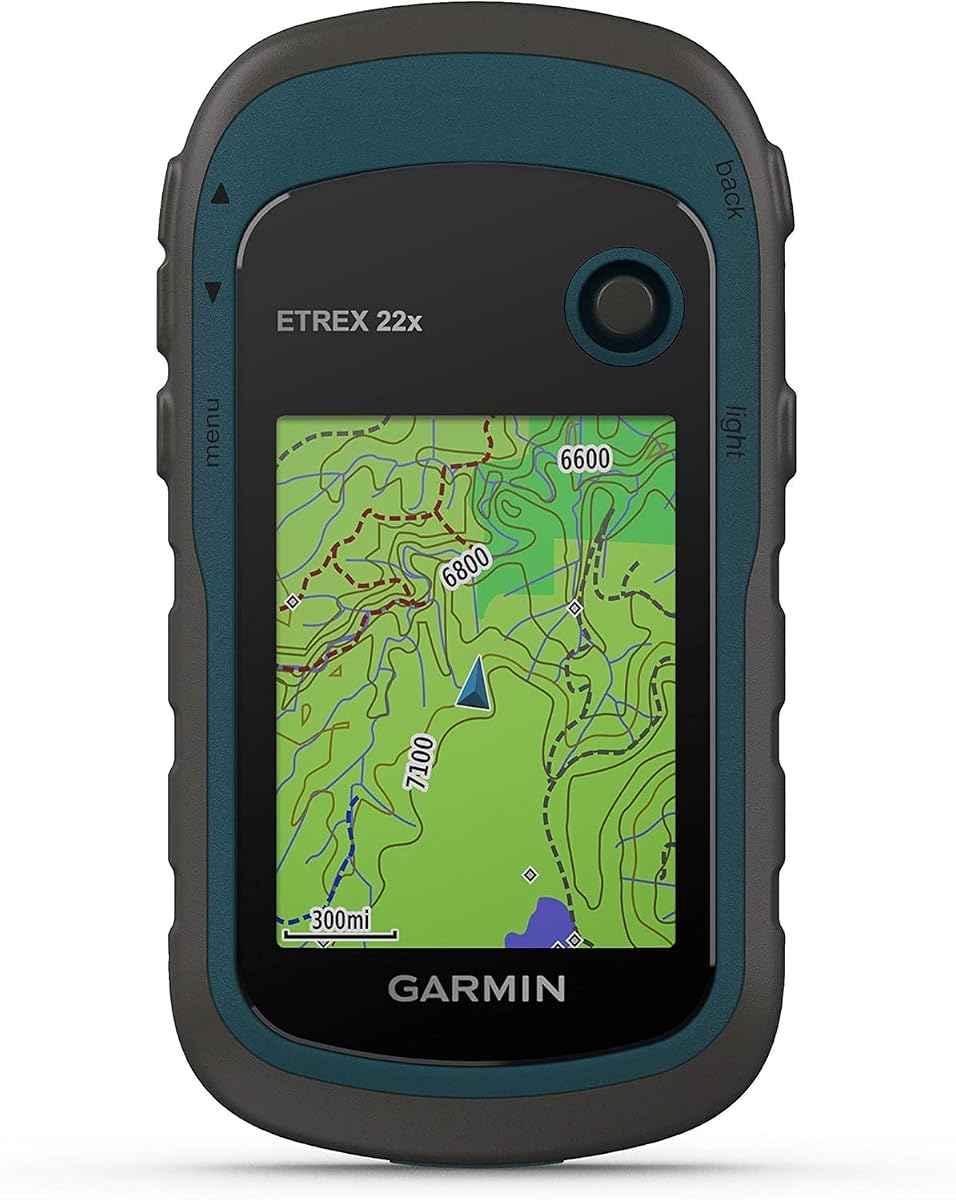



The Garmin eTrex 22x combines a compact traditional housing with a readable color display, built-in maps, and dependable GPS and GLONASS positioning. Its 4.3 rating reflects a strong balance of simplicity and capability, making it a practical first handheld for hunters who want reliable navigation without carrying a more complex device.
We may earn a commission when you buy through this link, at no additional cost to you.
The 2.2-inch sunlight-readable screen presents 240 by 320 pixels and comes with TopoActive mapping featuring routable roads and trails. Support for two satellite systems improves tracking in challenging terrain, while 8 GB of internal memory and a microSD card slot provide room for additional map downloads. Two AA batteries offer up to 25 hours in GPS mode, a useful figure for long scouting days.
Its main limitation is the absence of an electronic compass and barometric altimeter. Hunters who need a directional heading while stationary or detailed elevation readings will get more from the eTrex 32x. The smaller display also provides less room for detailed map inspection than the GPSMAP 65 or GPSMAP H1 Premium.
For hunters seeking an uncomplicated, durable navigator with useful mapping and expandable storage, the eTrex 22x is an excellent general recommendation. It is especially attractive for users who prefer physical controls, replaceable batteries, and a smaller unit that is easy to carry in a pocket, belt clip, or compact chest pack.
GPS and GLONASS support help maintain positioning in more challenging environments than GPS alone. Combined with preloaded TopoActive maps, this gives the eTrex 22x a dependable foundation for following roads and trails, recording routes, and navigating between hunting locations.
Eight gigabytes of internal memory plus a microSD card slot gives hunters room to keep regional map data available offline. That is valuable in remote country where cellular coverage and a steady connection may be unavailable.
We may earn a commission when you buy through this link, at no additional cost to you.
The Garmin GPSMAP 65 is a balanced hunting handheld with a 4.5 rating, a larger color display, and advanced positioning designed for demanding terrain. Multi-band technology and expanded global navigation satellite system support distinguish it from simpler units, while physical buttons keep navigation practical when cold weather makes touchscreens less convenient.
We may earn a commission when you buy through this link, at no additional cost to you.
Its 2.6-inch sunlight-readable color screen offers a useful balance between map detail and portability. Routable TopoActive mapping is included, along with federal public land mapping for the United States. The Explore website and app can help organize tracks, routes, and waypoints and review field statistics when paired with a compatible smartphone.
The trade-off is size compared with the smaller eTrex devices. The GPSMAP 65 also has fewer of the extreme expedition features found in the GPSMAP H1 Premium and does not include the dedicated applied-ballistics focus of the Foretrex 701. Some expanded functions depend on a compatible phone rather than operating entirely on the handheld.
This is the most versatile choice for hunters who regularly move through steep country, dense forest, or urban canyons and want stronger positioning than a conventional GPS-only unit. The combination of advanced satellite reception, maps, tactile controls, and manageable size makes it an excellent all-around recommendation.
Multi-band positioning and expanded GNSS support are intended to improve accuracy in steep country, urban canyons, and forests with dense trees. That makes the GPSMAP 65 well suited to hunters whose routes cross elevations, ravines, and heavily wooded areas.
Button operation reduces the chance of accidental screen inputs and can feel more dependable with gloves or wet fingers. The 2.6-inch display remains large enough to examine routes and landmarks without becoming as bulky as a large-screen navigator.
We may earn a commission when you buy through this link, at no additional cost to you.
The Garmin eTrex 32x is a step up from the eTrex 22x for hunters who want additional orientation sensors in a familiar, rugged form. Its 4.2 rating reflects a well-equipped traditional handheld with a color screen, routable maps, GPS and GLONASS support, a three-axis compass, and a barometric altimeter.
We may earn a commission when you buy through this link, at no additional cost to you.
The three-axis compass provides a heading even when the user is not moving, which is useful while studying terrain or choosing a direction from a ridge. The barometric altimeter adds elevation tracking, and the 8 GB internal memory with microSD expansion supports downloaded maps. Two AA batteries can provide up to 25 hours of GPS operation.
Compared with the GPSMAP 65, it does not offer multi-band positioning or a larger display. That makes it more appropriate for hunters who value compass and altimeter functions in a traditional eTrex design but do not need the most advanced location engine in the list.
The eTrex 32x is a strong recommendation for hunters who want a compact, replaceable-battery navigator with more guidance tools than the eTrex 22x. It is particularly appropriate for backcountry hunting, elevation changes, and situations where a stationary compass heading can improve awareness.
A three-axis compass and barometric altimeter make this model more informative during route planning and field observation. These features help hunters understand direction and elevation without depending entirely on motion-based tracking.
The 2.2-inch color display, GPS and GLONASS support, and 25-hour GPS runtime align closely with the eTrex 22x. That familiar foundation makes the 32x an accessible upgrade for buyers who understand the standard eTrex control layout.
We may earn a commission when you buy through this link, at no additional cost to you.
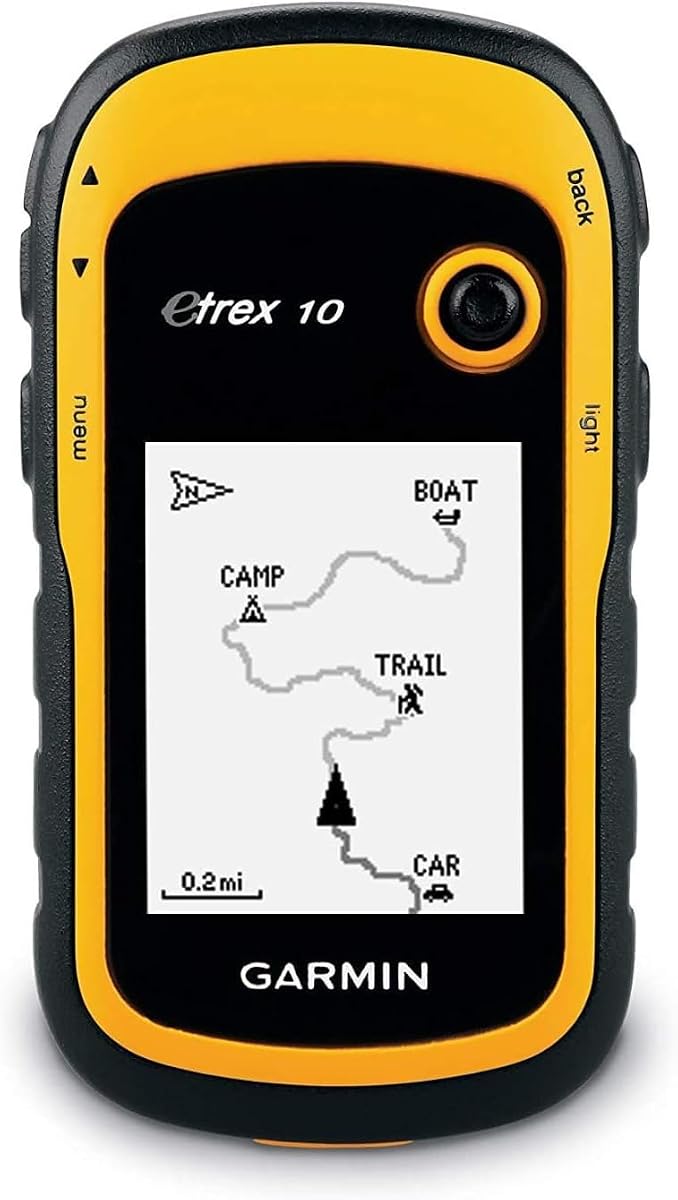
The Garmin eTrex 10 remains a straightforward option for hunters who want basic worldwide navigation in a durable package. Its 4.3 rating reflects a dependable handheld with a preloaded worldwide basemap, a monochrome display, WAAS-enabled GPS, HotFix, and GLONASS support.
We may earn a commission when you buy through this link, at no additional cost to you.
IPX7 waterproofing protects against rain and splashes, while two AA batteries provide up to 20 hours of use. Paperless geocaching and Garmin spine mounting accessory support add practical versatility. The unit can display high and low elevation points and store waypoints along a track for time and distance estimates.
Its monochrome screen is the clearest limitation. It offers less visual richness than every color model in the guide, and the basic feature set does not include an electronic compass or barometric altimeter. It is also not a high-detail topographic navigation system by modern handheld standards.
The eTrex 10 makes sense for hunters who value simplicity, worldwide mapping, long-established reliability, and low-complexity physical controls. It is best suited to general wayfinding, geocaching, and basic route recording rather than detailed terrain analysis or advanced satellite positioning.
The preloaded worldwide basemap makes the eTrex 10 useful for travel beyond a single familiar region. Its straightforward satellite support and physical controls reduce both map complexity and the learning curve for new handheld users.
IPX7 waterproofing supports use during rain, splashes, and humid conditions. Two AA batteries make it convenient to carry spare power without depending on a proprietary rechargeable pack.
We may earn a commission when you buy through this link, at no additional cost to you.
The Garmin eTrex SE stands out for endurance and broad satellite compatibility, earning a 4.2 rating among hunters who spend long periods away from power. It combines a 2.2-inch high-resolution color display with up to 168 hours in standard mode and an extraordinary 1,800 hours in expedition mode using two replaceable AA batteries.
We may earn a commission when you buy through this link, at no additional cost to you.
Multi-GNSS support includes GPS, GLONASS, Galileo, BeiDou, and QZSS, improving flexibility in challenging environments. The digital compass supplies an accurate heading even while stationary, and the IPX7 water-resistant design handles changing weather. Pairing with the Garmin Explore app supports wireless software updates, trip planning, Active Weather, smart notifications, and additional mapping.
The largest caveat is that expedition mode extends runtime by changing how often location data is recorded, so hunters who require continuous high-frequency tracking may prefer a shorter-runtime standard mode. Some smartphone-connected features also require a compatible device and do not replace the value of standalone navigation.
The eTrex SE is a compelling choice for backcountry hunters planning multiday trips, especially those who want flexible replaceable batteries and multi-system navigation in a compact color handheld. Its combination of endurance and connectivity makes it one of the most versatile picks in the guide.
The 1,800-hour expedition figure makes the eTrex SE well suited to remote trips where charging opportunities are limited. Standard mode still provides a lengthy 168-hour maximum, offering flexibility according to the tracking demands of the outing.
Five-system GNSS broadens the available satellite networks, while the digital compass provides a useful heading when standing still. The Explore app adds planning, updates, weather, notifications, and geocaching information without turning the unit into a general-purpose smartphone.
We may earn a commission when you buy through this link, at no additional cost to you.
The Garmin Foretrex 701 Ballistic Edition is the most specialized hunting handheld in this group and carries the highest listed rating at 4.6. Its defining advantage is Applied Ballistics Elite software for calculating aiming solutions for long-range shooting, paired with GPS, GLONASS, and Galileo positioning.
We may earn a commission when you buy through this link, at no additional cost to you.
Built to MIL-STD-810G and compatible with night-vision goggles, it targets demanding field environments. A three-axis accelerometer, three-axis compass, and barometric altimeter support navigation awareness. Battery life exceeds 48 hours in navigation mode, reaches up to one week in UltraTrac mode, and can extend to one month in watch mode.
The two-inch display is small compared with the touchscreens and larger color screens elsewhere in the guide. Smart notifications expand the device's usefulness for communications, but the core emphasis remains precision navigation and ballistic calculation rather than detailed recreational mapping.
The Foretrex 701 is the strongest choice for hunters who take long-range shots and value specialized ballistic tools in a military-oriented body. Buyers focused on general hiking, touchscreen map exploration, or broad hunting activities may find a general-purpose Garmin handheld more flexible.
Applied Ballistics Elite software gives the Foretrex 701 a clear identity beyond ordinary wayfinding. It is intended to help shooters calculate aiming solutions for long-range use while retaining robust navigation and sensor functions.
MIL-STD-810G construction and night-vision compatibility support use in demanding conditions. Battery figures of more than 48 hours in navigation mode and up to one month in watch mode suit extended deployments and low-frequency tracking.
We may earn a commission when you buy through this link, at no additional cost to you.
The Garmin Oregon 700 brings a 3-inch sunlight-readable touchscreen to hunters who favor direct map interaction over button-only operation. Its 4.1 rating reflects a rugged outdoor device with flexible orientation, an electronic compass, accelerometer, barometric altimeter, and useful activity profiles.
We may earn a commission when you buy through this link, at no additional cost to you.
The touchscreen can be used in landscape or portrait view, making it easier to switch between map exploration and route-oriented views. The compass is tilt compensated, which helps maintain directional accuracy when the device is held at different angles. Activity profiles include climb, hike, hunt, bike, geocache, fish, and more.
Its IPX7 water rating and ruggedized body suit outdoor conditions, but the listed 16-hour battery life is the shortest among the color or touchscreen options highlighted here. A touchscreen can also be less appealing with wet or gloved fingers, so hunters who expect frequent cold-weather use may prefer physical controls.
The Oregon 700 is a good match for hunters who want detailed screen space, quick access to activity modes, and a versatile control scheme. It is particularly useful for mixed outdoor users who also hike, fish, geocache, or cycle and want one device to cover several pursuits.
The 3-inch display offers more room for maps than compact eTrex models. Dual orientation lets users choose portrait for narrow trails or landscape for wider map views, improving flexibility in different hunting environments.
Dedicated profiles for hunt, hike, climb, geocache, bike, and fish streamline field navigation. Connect IQ compatibility also allows users to customize data fields, widgets, and applications for their preferred activities.
We may earn a commission when you buy through this link, at no additional cost to you.
The Garmin GPSMAP H1 Premium is the broadest premium offering in the guide, combining a 3.5-inch color touchscreen with physical buttons and advanced navigation hardware. Its hybrid control design is particularly thoughtful for hunting, allowing map exploration through touch while preserving tactile operation in rain, snow, or rugged conditions.
We may earn a commission when you buy through this link, at no additional cost to you.
Multi-band GPS and multi-GNSS positioning are designed to improve accuracy in dense forests, deep valleys, and urban canyons. The built-in ABC package includes an altimeter, barometer, and compass. A built-in LED flashlight and loud siren add emergency tools, while the removable loop carabiner and integrated Spine Mount 2 support different carry setups.
The supplied bundle includes the handheld, charging accessories, a power bank, cables, and a cleaning kit. This adds convenience, although buyers who only need the device may prefer a simpler package. Satellite imagery can be downloaded by Wi-Fi, and optional Outdoor Maps+ content extends global mapping options.
For hunters seeking premium navigation, modern controls, emergency features, and substantial battery endurance, the GPSMAP H1 Premium is the top all-around choice. Its 145-hour GPS mode and 840-hour expedition mode further distinguish it from most conventional handhelds, although it should be judged on current availability and included accessories.
The 3.5-inch scratch-resistant, sunlight-readable glass supports tapping, swiping, and zooming, while physical buttons provide a dependable alternative. A customizable quick-action button can place important functions close at hand.
Multi-band positioning, detailed topographic mapping, downloadable satellite imagery, and an emergency flashlight create a strong feature set. IP67 water and dust resistance and MIL-STD-810 testing reinforce its rugged positioning.
We may earn a commission when you buy through this link, at no additional cost to you.
The Garmin GPSMAP H1 Bundle offers the same core handheld concept as the Premium package, emphasizing detailed maps, downloadable satellite imagery, and a rugged hybrid interface. It is a particularly relevant choice for hunters who also expect to spend substantial time hiking, scouting, or navigating complex routes away from vehicles.
We may earn a commission when you buy through this link, at no additional cost to you.
Its 3.5-inch color display uses scratch-resistant, sunlight-readable glass intended for tapping, swiping, and zooming with gloves. Physical buttons provide an alternative for wet hands or difficult conditions. Preloaded TopoActive maps cover the United States, Canada, and Mexico, and Wi-Fi enables direct download of high-resolution satellite imagery.
Multi-band GPS, multi-GNSS, and ABC sensors support detailed positioning and environmental awareness. Built-in flashlight and siren functions are useful safety additions, while IP67 protection and MIL-STD-810 testing suit demanding outdoor environments. The package includes charging hardware, cables, and a microfiber cleaning cloth.
This bundle is best for users who value a ready-to-use collection of accessories and detailed offline navigation. Its lack of a listed rating means buyers should examine current customer feedback when available, while also verifying the precise contents and compatibility of the included charging accessories.
Wi-Fi satellite image downloads help hunters inspect terrain, elevation features, and points of interest before entering remote country. Preloaded regional topographic mapping adds a useful layer for travel beyond the download area.
The inclusion of USB charging components and a cleaning cloth reduces the need to purchase basic accessories separately. Buyers should still confirm connector types and current bundle contents because accessory bundles can change.
We may earn a commission when you buy through this link, at no additional cost to you.
The Garmin Montana 600 is defined by its large 4-inch sunlight-readable color touchscreen, making it an attractive option for hunters who want to examine maps, routes, and surrounding terrain at a glance. Its 4.2 rating reflects a capable unit with familiar physical controls, a three-axis compass, and a barometric altimeter.
We may earn a commission when you buy through this link, at no additional cost to you.
The large display reduces the need to zoom repeatedly when navigating unfamiliar terrain. A high-sensitivity, WAAS-enabled GPS receiver supports position tracking, while the compass and altimeter add useful orientation and elevation information. Its waterproof design is appropriate for rain, splashes, and outdoor hunting environments.
The 4-inch screen makes the Montana 600 bulkier than the compact eTrex devices and less pocketable than the GPSMAP 65. Its listed specifications also predate several capabilities found in newer models, including multi-band positioning, advanced emergency tools, extensive smartphone connectivity, and Wi-Fi image downloads.
The Montana 600 remains a solid recommendation for hunters who prioritize screen size and straightforward navigation over the latest satellite or smart features. It is most useful for scouting, route review, and field orientation where a generous touchscreen can make maps easier to read.
The four-inch display provides more visible map area than any other model in this comparison. That extra room can help users understand routes, identify landmarks, and inspect a hunting area without frequent zooming.
Physical function controls provide a practical alternative to the touchscreen, while the compass and altimeter contribute useful heading and elevation data. These qualities suit hunters who want more screen than a traditional eTrex without adopting the newest premium interface.
We may earn a commission when you buy through this link, at no additional cost to you.
The right hunting GPS balances positioning accuracy, readable mapping, physical durability, useful orientation sensors, and enough battery life for the intended trip. Hunting conditions, route complexity, and user experience determine which features matter most.
Satellite support determines how effectively a handheld maintains a position beneath tree cover, beside steep canyons, or in broken terrain. The eTrex 22x, 32x, and eTrex 10 use GPS and GLONASS, while the eTrex SE expands access to GPS, GLONASS, Galileo, BeiDou, and QZSS. The GPSMAP 65 and GPSMAP H1 models add multi-band positioning, which is designed to improve accuracy in challenging locations such as dense forests, deep valleys, and urban canyons. Hunters who cover rugged country or place substantial importance on route accuracy should generally prioritize the newest positioning capabilities.
Display size affects how easily a hunter can interpret maps and route lines. The compact eTrex models use 2.2-inch screens, the GPSMAP 65 uses 2.6 inches, the Oregon 700 uses 3 inches, and the GPSMAP H1 uses 3.5 inches. The Montana 600 provides the largest display at 4 inches. Sunlight readability matters more than raw size in open country, while touchscreen capability can make detailed map inspection and route manipulation easier. Physical buttons remain useful when the display is wet, cold, or being operated with gloves, which is why the GPSMAP 65 and H1 are particularly compelling for mixed conditions.
Hunters frequently travel beyond cellular coverage, so useful mapping should be available without a data connection. The eTrex 22x and 32x include TopoActive maps with routable roads and trails, 8 GB of internal memory, and microSD card expansion. The GPSMAP 65 adds routable TopoActive mapping and U.S. federal public land maps. Both GPSMAP H1 bundles provide preloaded TopoActive mapping for the United States, Canada, and Mexico, with satellite imagery that can be downloaded by Wi-Fi. The eTrex 10 includes a worldwide basemap, but its monochrome presentation offers less visual detail.
Battery needs vary by trip length and tracking mode. Conventional eTrex models use replaceable AA batteries and are rated for roughly 20 to 25 hours in GPS mode. The eTrex SE offers up to 168 hours in standard mode and 1,800 hours in expedition mode, although lower-frequency tracking in expedition mode changes its behavior. The Foretrex 701 exceeds 48 hours in navigation mode and reaches up to one month in watch mode. The GPSMAP H1 reaches 145 hours in GPS mode and 840 hours in expedition mode. A rechargeable premium unit may be convenient for frequent travel, while AA compatibility is valuable where batteries are difficult to replace or recharge.
A three-axis compass gives a heading even when the user is stationary, while a barometric altimeter helps track elevation changes and supports weather-related awareness. The eTrex 32x includes both in a compact traditional design, the GPSMAP H1 includes them as part of its ABC sensor suite, and the Montana 600 also includes a compass and altimeter. The eTrex SE has a digital compass but no listed barometric altimeter. These functions are especially useful for hunters studying slopes, navigating ridgelines, or moving through terrain where elevation and direction matter as much as the plotted route.
A hunting handheld may encounter rain, mud, dust, cold, impact, and changing temperatures. IPX7 protection is specified for the eTrex 10, eTrex SE, and Oregon 700, while the Foretrex 701 is constructed to MIL-STD-810G and supports night-vision compatibility. The GPSMAP H1 is also tested to MIL-STD-810 standards and rated IP67. These ratings do not eliminate every risk, but they provide useful evidence that a device is intended to tolerate demanding outdoor conditions. Physical button operation is also worth considering because a wet or cold touchscreen may be less responsive.
Touchscreens provide more room for interactive maps, zooming, and menu navigation. The Oregon 700, Montana 600, and GPSMAP H1 use touchscreens, while the eTrex 22x, 32x, 10, and SE use traditional physical controls. The GPSMAP 65 and Foretrex 701 also favor buttons. Hunters who routinely use gloves, operate in wet weather, or prefer deliberate input should place substantial value on tactile buttons. Those who want detailed visual map exploration may appreciate the speed and flexibility of a larger touchscreen.
General-purpose handhelds support route finding, waypoints, elevation data, and activity menus, but some models serve hunting more directly. The Oregon 700 includes a dedicated hunt activity profile, while the Foretrex 701 adds Applied Ballistics Elite software for calculating long-range aiming solutions. The GPSMAP H1 contributes a built-in flashlight, loud siren, and customizable quick-action control. Hunters should consider whether they need dedicated ballistic calculations, emergency tools, or simply reliable navigation between stands and camps. Buying a specialized feature that will not be used can add unnecessary complexity.
Before leaving for the hunt, update the device software and maps while connected to power and, where supported, Wi-Fi or the Garmin Explore app. Create a route, download the relevant topographic or public land maps, save important waypoints, and confirm that the compass calibration and position lock behave correctly near the starting point. Reading the controls in a safe campsite or near a known landmark is much easier than learning them after the route has become difficult.
Carry the unit in a protective position where it will not be dropped, crushed, or exposed to excessive heat. A chest pocket or securely attached mount can keep the display accessible while reducing movement. Use a lanyard or retention clip in terrain where losing a small device would be costly. Keep the battery compartment dry, use compatible batteries, and carry a backup power source when the trip exceeds the expected runtime in the selected tracking mode.
After the trip, remove dirt and moisture with a soft cloth, inspect the battery contacts, and make sure the ports are dry before charging. Avoid exposing the handheld to excessive heat or harsh chemicals. Store it with enough charge to prevent a deeply discharged battery from sitting for long periods, especially during cold weather, and review recorded tracks and waypoints at home while the experience is still fresh.
A dedicated handheld is usually better for remote navigation because it offers replaceable batteries, stronger outdoor positioning options, rugged construction, and operation without cellular service. A smartphone remains useful for planning, weather research, and communication, but cold, battery drain, damaged screens, and weak signals can reduce its reliability in the field. The best approach is often to use both for their strengths.
Multi-band positioning can improve accuracy by using multiple satellite frequency bands rather than relying on one alone. This is especially helpful in steep country, dense forest, deep valleys, and urban canyons where a simpler signal may be less stable. The GPSMAP 65 and GPSMAP H1 models include multi-band support, making them strong choices for hunters who navigate technically difficult ground.
It depends on how much elevation matters to your hunt. A barometric altimeter can track elevation changes and add useful information when moving across ridges, ravines, or steep slopes. Hunters scouting varied terrain or monitoring routes across significant elevation gains may appreciate it. Hunters primarily following marked roads and trails between established camps can often manage with a simpler model.
A touchscreen can be useful for detailed maps, but cold, wet, or gloved operation may reduce accuracy or responsiveness. Physical buttons provide a more dependable alternative in harsh conditions. The GPSMAP H1 combines both approaches, while the GPSMAP 65 uses physical buttons and remains a practical option for hunters who prioritize tactile operation.
The required runtime depends on trip length, temperature, screen use, and whether continuous tracking or an expedition mode is needed. Standard GPS modes on the eTrex line provide tens of hours, while the eTrex SE and GPSMAP H1 offer much longer expedition figures. Buyers should choose a mode that matches their tracking needs rather than selecting the longest headline figure automatically.
Yes. Most models support general navigation, waypoints, tracks, and route recording, while the eTrex 10 and eTrex SE specifically include paperless geocaching features or automatic cache updates. The Oregon 700 includes profiles for hike, geocache, fish, bike, climb, and hunt. Hunters who expect to use one device for several outdoor pursuits should look for suitable profiles and sensor functions.
Yes, downloading maps in advance is strongly recommended because remote hunting areas often have unreliable cellular service. Models with internal memory, microSD support, or Wi-Fi downloads provide different ways to keep mapping available offline. Confirm that the downloaded region covers the entire trip and review any storage or account requirements before leaving.
The Garmin Foretrex 701 Ballistic Edition is the dedicated choice because Applied Ballistics Elite software calculates aiming solutions for long-range shooting. It also includes robust positioning, orientation sensors, military-oriented construction, and extended battery modes. Hunters who only need conventional navigation may prefer a general-purpose eTrex, GPSMAP, Oregon, or Montana device.
The Garmin eTrex 22x is the best overall hunting GPS handheld for buyers who want compact size, offline mapping, and dependable dual-system positioning. The GPSMAP 65 stands out as the most versatile option because it combines multi-band accuracy, a larger color display, physical buttons, and useful mapping, while the GPSMAP H1 Premium leads the premium category with hybrid controls, imagery, safety tools, and exceptional endurance.
Prioritize the conditions you will actually encounter. Select broad multi-GNSS or multi-band support for demanding terrain, a compass and altimeter for elevation-heavy routes, and expedition battery modes only if lower tracking frequency will not compromise your needs. Hunters who value simplicity can remain well served by an eTrex, while dedicated ballistic shoppers should look toward the Foretrex 701.
Before making a final purchase, confirm the current product bundle, map region, storage options, app compatibility, battery configuration, and included accessories. Prices and package contents can change, and feature availability may vary by country. Comparing those details against the intended trip will help ensure the selected handheld remains dependable when it matters most.