
OneOdio Pro-10
4.4Editor score
Large 50mm drivers
Single-ear monitoring
Broad wired compatibility
Our Edm Headphones guide compares ten studio, DJ, wireless, and bass-focused models for mixing, monitoring, travel, and everyday listening with clear feature
EDM headphones need to deliver punchy low frequencies, articulate highs, dependable isolation, and the durability required for long mixing sessions. The right model also depends on whether you perform live, produce tracks, monitor mixes, or simply enjoy electronic music with added bass and wireless convenience.
The products in this guide were compared using their supplied specifications, physical designs, connectivity, driver configurations, monitoring features, ratings, and intended uses. The list covers traditional studio headphones, on-ear DJ models, wired and wireless over-ear designs, and bass-focused listening options for different experience levels.
Each entry highlights the strongest qualities and most important trade-offs without treating personal listening preferences as universal facts. From swivel earcups and detachable cables to active noise cancellation and multi-driver bass systems, the picks show what each model offers. Prices and availability can change.
4.4Editor score

4.7Editor score

4.7Editor score
This side-by-side comparison evaluates the ten headphones by connection style, physical design, monitoring capability, driver configuration, and notable features. It helps distinguish dedicated studio and DJ tools from wireless lifestyle models and bass-focused consumer headphones.



The Sony MDR7506 is a professional large-diaphragm headphone with a 4.7 rating and a long-standing reputation as a dependable studio workhorse. Its secure closed-ear design, 40mm neodymium drivers, and 10Hz to 20kHz frequency response make it a strong all-around choice for EDM producers, musicians, and listeners who want a direct, powerful presentation.
We may earn a commission when you buy through this link, at no additional cost to you.
Isolation is one of the model's most compelling features for mixing. The closed ear cups help reduce external noise, allowing the user to judge bass, kick drums, and low-frequency transitions without being distracted by a busy room. Neodymium magnets support the promise of powerful, detailed sound, while the large diaphragm format should suit tracks built around dense rhythm sections and layered synthesis.
The main compromises concern modern convenience. Its 9.8-foot cord is fixed rather than detachable, so a damaged connection cannot be replaced without replacing the headphone. It also offers no wireless operation, active noise cancellation, built-in microphone, or compact modern travel features. The provided soft case and folding construction help offset the limitations of its size.
This is a strong recommendation for producers, live performers, and serious EDM listeners who prioritize dependable isolation and accurate monitoring over portability. It is less suitable for commuters who want Bluetooth, convenience-focused users who prefer wireless freedom, or anyone who routinely needs a detachable cable.
The effective closed-ear construction helps users assess the low end and layered percussion in distracting environments. That isolation makes the MDR7506 particularly useful for home studios, rehearsal spaces, and shared monitoring rooms where outside sound could compromise critical listening.
The foldable structure and included soft case support repeated transport between a home studio, rehearsal area, or venue. A full-size 1/4-inch adapter is also included for equipment that does not accept a standard 3.5mm connection.
We may earn a commission when you buy through this link, at no additional cost to you.
The OneOdio Pro-10 combines 50mm neodymium drivers with a wired over-ear design and receives a 4.4 rating. It is aimed at DJs, musicians, and budget-conscious listeners who want bold bass, clear vocals, crisp highs, and the practical ability to monitor from one ear without moving a large full-size cup.
We may earn a commission when you buy through this link, at no additional cost to you.
Large 50mm drivers form the centerpiece of its sound configuration, with neodymium magnets contributing to the stated powerful bass and balanced stereo presentation. The adjustable, stretchable headband and soft padded cushions are designed for extended sessions, while the closed-style coverage offers isolation without requiring a wireless connection.
Its 90-degree swiveling ear cups make it straightforward to lift one side against an ear for cueing. The headphone works with smartphones, laptops, tablets, desktop computers, audio interfaces, mixers, and amplifiers through 3.5mm or 6.35mm connections. A shared audio port also allows a second pair of headphones to be connected for collaborative listening.
The Pro-10 is a practical recommendation for new DJs, home producers, and listeners who want a large-driver headphone without moving into professional studio pricing. The tradeoff is that it is exclusively wired, and users who travel frequently or prioritize active noise cancellation will need a more portable wireless option.
The 90-degree swivel mechanism supports a natural one-ear monitoring position, allowing one earcup to rest against the ear while the other stays lowered. That makes track cueing and mix practice more convenient than with a fixed-profile headphone.
The 50mm neodymium driver system is intended to produce forceful bass while maintaining clear vocals and crisp upper frequencies. It offers an engaging starting point for electronic music, although users who require a reference-neutral studio response may prefer another model.
We may earn a commission when you buy through this link, at no additional cost to you.
The Audio-Technica ATH-M20x is a professional studio monitor headphone designed for tracking and mixing, with a 4.6 rating. Its 40mm drivers, rare-earth magnets, copper-clad aluminum wire voice coils, and circumaural construction provide a focused alternative to bass-heavy consumer models.
We may earn a commission when you buy through this link, at no additional cost to you.
The model is explicitly tuned for enhanced low-frequency performance, which remains important for electronic music because kick drums, sub-bass, basslines, and sidechain movement all need to be evaluated carefully. At the same time, it is a studio monitor rather than a portable entertainment headset, so its priorities are tracking, mixing, and isolation.
A useful design detail is the single-side cable exit. This keeps the cable away from the listening area and reduces the chance of it interfering during monitoring. The over-ear shape contours around the ears for isolation in loud spaces, although the supplied data does not highlight a swivel mechanism for one-ear use.
The ATH-M20x is a good fit for home studio owners, tracking musicians, and EDM producers who want a traditional closed-back monitoring tool without wireless complexity. It may not satisfy users who need a boom microphone, foldable travel design, active noise cancellation, or frequent one-ear cueing.
Enhanced low-frequency tuning gives the listener a clearer view of bass content while preserving the headphone's studio-monitoring purpose. This is useful when checking how a kick and bassline interact across different playback systems.
The circumaural over-ear design helps block surrounding noise, making it easier to hear quiet details. It also helps maintain a consistent sense of isolation while tracking or mixing in an active environment.
We may earn a commission when you buy through this link, at no additional cost to you.
The Audio-Technica ATH-M50X is a professional-grade studio monitor headphone with a 4.7 rating and a feature set aimed at mixing, mastering, and serious listening. Its proprietary 45mm large-aperture drivers and copper-clad aluminum wire voice coils are designed to deliver clarity across an extended frequency range.
We may earn a commission when you buy through this link, at no additional cost to you.
The headphone is especially relevant to EDM because electronic mixes rely on accurate bass response. Audio-Technica describes the low end as deep and accurate, while the circumaural design provides strong isolation in loud environments. That combination can help a producer detect masking, excessive sub energy, and balance issues between bass and kick.
Its 90-degree swiveling earcups support one-ear monitoring, and the detachable cable is a major practical improvement for studio use. A damaged lead can be replaced, and users can choose a cable length or connection style that suits their setup. Professional-grade earpad and headband materials are intended to support durability and comfort.
The ATH-M50X is a strong recommendation for producers, mastering engineers, DJs who need a wired reference tool, and listeners willing to prioritize sound quality over travel convenience. It is less compelling for people seeking Bluetooth, active noise cancellation, or a lighter form designed primarily for commuting.
The stated deep, accurate bass response helps reveal how sub-bass and kick placement interact. Larger drivers and extended range support a fuller picture of layered electronic arrangements than many basic listening headphones.
The detachable cable reduces the risk of losing an otherwise functional headphone to a damaged connector. It also provides a foundation for tailoring cable length and termination to different studio, DJ, and home-listening arrangements.
We may earn a commission when you buy through this link, at no additional cost to you.
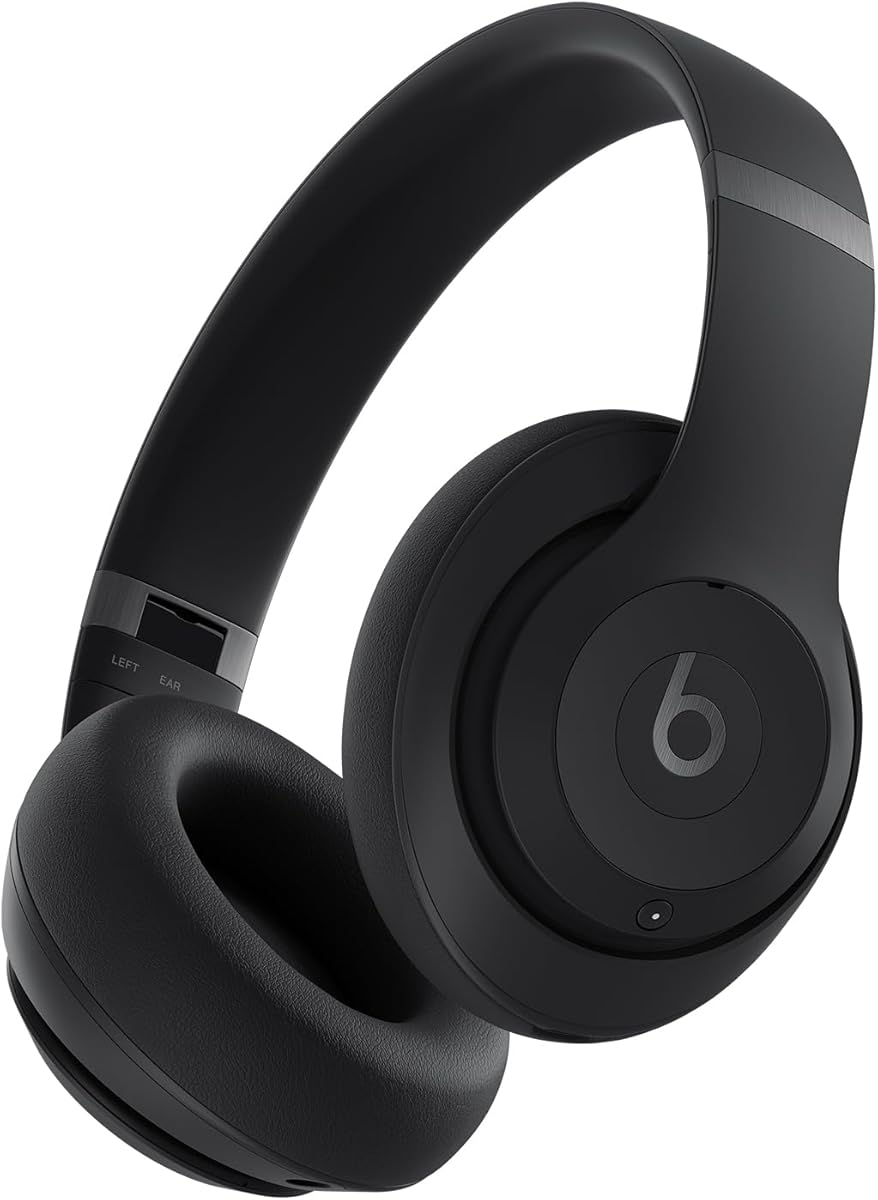
The Beats Studio Pro is a premium wireless over-ear headphone with a 4.5 rating. It is built for music, calls, commuting, travel, and extended everyday listening, with active noise cancellation, a stated 40-hour battery life, and support for both USB-C lossless audio and a conventional 3.5mm connection.
We may earn a commission when you buy through this link, at no additional cost to you.
Its custom acoustic platform is designed to deliver rich, balanced sound across devices and environments. A one-touch pairing process supports straightforward connection to Apple and Android devices, while Class 1 Bluetooth is intended to provide stable connectivity with fewer dropouts.
This model offers several conveniences absent from the studio-focused alternatives in the list. Transparency mode lets outside sound mix with the music, spatial audio adds dynamic head tracking and 360-degree presentation, and voice-targeting microphones are intended to improve call clarity. Fast Fuel charging provides up to four hours of use from a 10-minute charge.
The Beats Studio Pro is a compelling choice for EDM fans who want wireless freedom, travel features, and polished consumer audio. It is not a dedicated reference studio monitor or a one-ear DJ cueing headphone, so producers who need precise professional monitoring should look toward the Audio-Technica or Sony options.
Active noise cancellation is designed to block distractions at work, during flights, and on busy commutes. Transparency mode provides a convenient alternative when hearing the surrounding environment is important.
USB-C lossless support is intended to preserve high-quality digital audio on compatible devices, while the included 3.5mm cable provides an analog option. That mix of wireless and wired choices makes the headphone adaptable to several environments.
We may earn a commission when you buy through this link, at no additional cost to you.
The Sennheiser HD 25 is a professional on-ear DJ headphone with a 4.6 rating. Its defining qualities are lightweight aluminium voice coils, high sensitivity, the ability to handle very high sound pressure levels, and a design described as comfortable during long periods of use.
We may earn a commission when you buy through this link, at no additional cost to you.
For EDM DJs, the HD 25 focuses on practical monitoring rather than travel technology. Its on-ear format is less substantial than many over-ear studio models, while the high sound-pressure capability is relevant when working in loud environments or setting cue levels safely relative to the equipment.
The tough, detachable, single-sided cable is another meaningful advantage. A single-side connection reduces clutter around the listening area, while detachable construction allows a worn cable to be replaced independently. The lightweight design also helps limit fatigue during a long set or extended rehearsal.
This headphone is a strong recommendation for DJs who prioritize low weight, durability, and dependable wired monitoring. It is less suitable for listeners who want deep isolation, wireless connectivity, active noise cancellation, or the spacious comfort of a large over-ear cushion.
The stated ability to handle very high sound pressure levels makes the HD 25 suitable for monitoring in demanding settings. High sensitivity allows the headphone to reveal quieter cues without requiring the user to push source levels as aggressively.
The lightweight construction and aluminium voice coils reduce the burden associated with carrying a full-size professional headphone. The result is a design centered on long-session comfort and straightforward operation.
We may earn a commission when you buy through this link, at no additional cost to you.
The OneOdio A70 supports both Bluetooth and wired operation, giving it unusual flexibility for an EDM-focused over-ear headphone. It carries a 4.4 rating and combines 40mm neodymium drivers with a stated wireless runtime of up to 72 hours.
We may earn a commission when you buy through this link, at no additional cost to you.
Its dual-mode design means the battery is not a concern during critical listening because the included headphones can also operate through the supplied 3.5mm-to-6.35mm or 3.5mm-to-3.5mm cable. A locking auxiliary plug design is intended to keep connections stable, while the aluminum fascia and neodymium drivers support powerful bass and dynamic stereo sound.
Comfort and portability are additional priorities. Soft memory cotton and skin-friendly protein leather cover the cushions and headband, while a rotatable and foldable structure helps with fit, isolation, and storage. A built-in microphone with noise reduction supports hands-free calls.
The A70 is a good fit for users who want one headphone to move between wireless home listening and wired DJ practice. Its limitation is that it does not provide active noise cancellation, so travelers who prioritize the strongest environmental noise reduction should examine the Beats Studio Pro instead.
Bluetooth provides cable-free convenience, while the included wired cables keep the headphone operational when the battery is depleted. This makes the A70 useful for both casual listening and setup-based DJ practice.
The rotatable and foldable design is intended to improve fit and make storage easier. Soft memory cotton and protein leather add comfort for extended listening without adding a separate travel pouch requirement.
We may earn a commission when you buy through this link, at no additional cost to you.
The Audio-Technica ATH-M40x is a professional studio monitor headphone with a 4.6 rating. It combines 40mm drivers, rare-earth magnets, copper-clad aluminum wire voice coils, and a robust construction in a design suited to both tracking and mixing.
We may earn a commission when you buy through this link, at no additional cost to you.
Its 90-degree swiveling earcups provide a natural way to monitor with one ear, which can be useful when comparing a mix or operating alongside another sound source. The circumaural design also wraps around the ears to create strong isolation in loud environments.
Detachable cables add practical flexibility, allowing users to replace a damaged lead and select an appropriate cable for different equipment. Professional-grade ear pads and headband materials are intended to support both durability and comfort across regular sessions.
The ATH-M40x is a strong recommendation for producers, musicians, and DJs who want a wired monitoring headphone with dependable one-ear operation. It does not include Bluetooth, active noise cancellation, a microphone, or travel-oriented folding, so it is better suited to a stationary setup than a mobile lifestyle.
The 90-degree swivel mechanism allows an earcup to sit against the ear while the other rotates away. This supports one-ear cueing, comparative listening, and easier interaction with studio equipment.
Detachable cables make it possible to replace a worn connection rather than the complete headphone. The included cable options also help accommodate different workstation and mixer arrangements.
We may earn a commission when you buy through this link, at no additional cost to you.
The Pioneer DJ HDJ-CUE1 is an on-ear wired DJ headphone created with new DJs in mind. It has a 4.6 rating and focuses on dependable monitoring, accessible operation, clear cueing, and a foldable design suitable for practice, gigs, and everyday listening.
We may earn a commission when you buy through this link, at no additional cost to you.
Its sound is tuned to help users hear tracks and beatmatch clearly in loud rooms. Soft earpads and a lightweight build are intended to preserve comfort through long sessions, which is especially relevant for someone developing the physical routine of DJing.
Swiveling earcups make one-ear monitoring a natural part of the design. That is an essential feature for mixing because it allows one ear to remain open while the other monitors the outgoing or incoming track. The foldable structure makes the headphone easier to store between uses.
The HDJ-CUE1 is a good recommendation for beginners, hobbyists, and mobile DJs who want a purpose-built wired headphone without a large full-size studio footprint. It is less appropriate for wireless commuting, reference-focused production workflows, or users wanting active noise cancellation.
The tuning focuses on making tracks and beatmatching easier to hear in loud rooms. Combined with swiveling earcups, it gives learners a practical tool for developing standard one-ear cueing habits.
The foldable structure supports storage in a DJ bag or equipment case. It makes the headphone easier to move between lessons, rehearsals, and gigs without changing its core wired monitoring approach.
We may earn a commission when you buy through this link, at no additional cost to you.
The Skullcandy Crusher Evo is a wireless over-ear headphone with a 4.7 rating and a focus on powerful, tactile bass. Its patented multi-sensory system combines two full-range 40mm audio drivers with additional dual bass drivers to give music and movies a more physical presentation.
We may earn a commission when you buy through this link, at no additional cost to you.
That extra bass capability is central to the product's identity. It is intended for listeners who want the kick drum, sub-bass, and low-frequency impact of EDM to be felt rather than merely heard. The result is a consumer listening experience that prioritizes excitement and immersion over neutral reference monitoring.
The headphone also offers up to 40 hours of battery life, with rapid charging providing up to four additional hours from a 10-minute charge. The Skullcandy app supports a hearing analysis that adjusts sound levels to the listener, while physical buttons manage calls, volume, and track navigation.
The Crusher Evo is a strong recommendation for EDM fans who prioritize bass, wireless convenience, and dramatic entertainment. It is less appropriate for mixing because the deliberately intense low end is not a substitute for a professional studio monitor, and the design does not emphasize one-ear swivel cueing.
Two additional bass drivers supplement the full-range drivers, creating a more forceful low-frequency presentation. This configuration is especially suited to kick-heavy EDM, bass music, and cinematic content viewed at home.
The companion app conducts a hearing analysis and adjusts sound levels to the individual listener. Convenient hardware controls also allow calls, volume changes, and track actions to be managed without returning to a phone.
We may earn a commission when you buy through this link, at no additional cost to you.
The right EDM headphone depends on the environment, monitoring demands, and desired level of bass. Consider isolation, driver design, connectivity, cable durability, one-ear operation, and portability before making a final choice.
A studio monitor headphone is intended to help a producer judge balance, frequency relationships, and low-frequency content. A DJ headphone prioritizes cueing, practical handling, and monitoring in a loud venue, while a consumer wireless model is designed around travel, calls, and convenient everyday entertainment. For EDM, these roles should not be confused: a bass-heavy lifestyle headphone may be exciting but will not provide the same reference function as a dedicated studio monitor.
EDM depends on powerful kick drums, sub-bass, and basslines, so low-frequency capability matters. However, excessive bass can obscure vocals, melodies, and high-frequency percussion. Models such as the OneOdio Pro-10 and Skullcandy Crusher Evo emphasize bold impact, while the Audio-Technica models aim to provide controlled studio reproduction. The most useful choice balances impact with enough clarity to hear every layer.
Closed-back and circumaural designs can reduce external sound, helping users hear subtle details in noisy rooms. The Sony MDR7506, Audio-Technica ATH-M20x, ATH-M40x, and ATH-M50X all emphasize isolation. On-ear DJ models are generally lighter and easier for one-ear use but may allow more outside sound through. Active noise cancellation adds another layer of environmental control for travel, although it is not a substitute for the passive isolation needed in serious mixing work.
One-ear monitoring is important for DJs because it allows one ear to remain open while the other follows a cue. The OneOdio Pro-10, Audio-Technica ATH-M40x, ATH-M50X, and Pioneer DJ HDJ-CUE1 all feature swiveling earcups. The Sony MDR7506 and Sennheiser HD 25 use a single-sided cable arrangement for professional workflows, but swivel monitoring is not highlighted in their supplied specifications. Check this feature carefully if live cueing is central to your activity.
Wired headphones provide consistent connections and remain functional without battery power, making them common in studio and DJ environments. The Sony MDR7506, OneOdio Pro-10, Audio-Technica studio models, Sennheiser HD 25, and Pioneer DJ HDJ-CUE1 are wired. Wireless models add portability and convenient device switching, with the Beats Studio Pro, OneOdio A70, and Skullcandy Crusher Evo offering stated battery advantages.
A detachable cable is valuable because it can be replaced if its connector or wire is damaged. The Audio-Technica ATH-M40x and ATH-M50X include detachable cables, and the Sennheiser HD 25 has a tough detachable single-sided cable. Fixed-cable designs avoid an additional connection point but may be less serviceable. Foldability, included cases, and rugged materials also matter if the headphone will travel between home, studio, rehearsal, and venue.
Larger drivers can support impactful bass and broad sound, while circumaural cups may create a sense of spaciousness and isolation. The OneOdio Pro-10 uses 50mm drivers, and the Audio-Technica ATH-M50X uses proprietary 45mm large-aperture drivers. Physical comfort depends on more than driver diameter, though: pad softness, clamping pressure, headband adjustability, weight, and fit all influence long sessions.
Active noise cancellation, transparency mode, spatial audio, microphones, fast charging, and app-based personalization can make a headphone more useful outside the studio. These features are valuable for travel and everyday communication, but they do not automatically make a model a better mixing tool. Similarly, multi-driver bass systems are exciting for entertainment but may not suit users who want a neutral or reference-oriented presentation.
Before using a new pair, inspect the earcups, headband, controls, and cable or charging port. Charge a wireless model fully before the first session, install any required app, and update its software if an update is available. For wired models, confirm that the output device supports the connector type and avoid forcing an adapter into the wrong socket.
For mixing, begin at a moderate monitoring level and adjust the source output only after reaching a comfortable balance. If the headphone supports one-ear monitoring, rotate the relevant earcup so the cup rests comfortably against the ear. Keep the headband stable and avoid moving the earcups excessively, since frequent adjustment can fatigue the neck and make monitoring inconsistent.
Store the headphone in a clean, dry environment after use. Wipe the earpads and surfaces gently, remove visible dust from vents and ports, and avoid liquids that could damage the finish or electronics. Never pull a wired model by its cable. For wireless headphones, follow the manufacturer's charging guidance and avoid using damaged cables. Periodic inspection of pads, hinges, connectors, and headband adjustment can reveal wear before it becomes a larger problem.
For mixing, a dedicated studio headphone is usually more useful because it is designed to reveal track balance, frequency detail, and low-frequency relationships. A consumer headphone may sound more exciting, but that does not necessarily mean it provides a more accurate view of the music. Choose a studio model for production and a consumer model for enjoyment or travel.
A capable low end is important because EDM often relies on kick drums, sub-bass, and basslines. Strong bass does not automatically mean exaggerated bass, however. A useful headphone should make low-frequency content clear and controlled enough that it does not hide vocals, synths, or high-frequency percussion.
One-ear monitoring, reliable wired connectivity, high output handling, a comfortable fit, and a durable cable are central priorities. Swiveling earcups make cueing easier, while a detachable or single-sided cable keeps the connection clear of the listening area. Isolation and bass response can also help, depending on the venue.
Wired models are generally more practical for studios and fixed DJ setups because they maintain a consistent connection and do not depend on battery life. Wireless headphones are better for commuting, travel, and casual listening. Some hybrid models, such as the OneOdio A70, support both approaches.
Yes, particularly for frequently used studio and DJ equipment. A detachable cable can be replaced after normal wear instead of requiring the entire headphone to be discarded. It can also make it easier to select a cable length or termination that suits the user's workstation, mixer, or travel bag.
Absolutely. The Audio-Technica models, Sony MDR7506, and other closed-back options are also capable of rewarding personal listening. Their larger, more specialized designs may be less convenient for commuting than wireless alternatives, but they can provide an immersive and detailed way to enjoy electronic music at home.
It allows an earcup to rotate into a comfortable one-ear position. DJs commonly use this arrangement to monitor one track while keeping the other ear open. It can also help musicians and producers compare sources or maintain awareness of nearby equipment and conversations.
Store them in a protective case or on a stable stand, keep moisture and direct heat away from them, and clean the pads gently. Avoid pulling on wired connections and inspect detachable cables for damage. Charging contacts and ports should also be kept free of dust and debris.
The Sony MDR7506 stands out as the strongest all-around professional option because of its isolation, detailed large-diaphragm design, and rugged construction. The OneOdio Pro-10 offers an affordable route into large-driver sound and one-ear monitoring, while the Audio-Technica ATH-M50X combines extended-range clarity, accurate bass response, and a detachable cable for serious studio work.
The right priorities depend on the use case. Choose a dedicated studio model for mixing, a lightweight or swiveling on-ear design for DJ practice, and a wireless model when commuting, calls, and travel matter most. For maximum bass impact, the Skullcandy Crusher Evo is a distinctive option, while the Beats Studio Pro and OneOdio A70 provide wireless convenience with different battery and connection approaches.
Before buying, check the current product listing, included accessories, connector format, and the latest specifications. Prices, discounts, and availability can change, so comparing the headphones based on design and features is more useful than choosing by cost alone. The right model should match the listener's environment, workflow, and preferred balance of isolation, impact, and convenience.