
Sinocare Upper Arm Blood Pressure Monitor
4.3Editor score
One-button operation
Large 3.6-inch display
Dual-user profiles
An easy to use blood pressure monitor should make daily readings simple, readable, and consistent. The right device combines a comfortable cuff, intuitive controls, clear results, dependable accuracy, and enough guidance to help users measure correctly. Upper-arm models generally offer the broadest fit, while wrist monitors can be more compact for frequent travel.
This guide compares ten monitors based on their stated accuracy features, operation, display readability, cuff range, memory, power options, voice guidance, irregular-heartbeat alerts, and app connectivity. It includes upper-arm and wrist models for different needs, from simple one-button devices to smart monitors that store and share readings digitally.
Each review identifies the features that make a particular monitor convenient for home use, along with practical limitations to consider before buying. The top picks highlight strong combinations of ease of operation, useful data management, and flexible family use. Product details and retailer availability can change, so readers should verify the current listing and package contents before purchasing.
4.3Editor score
4.4Editor score
4.5Editor score
As an Amazon Associate we earn from qualifying purchases.
The comparison below shows how each monitor differs in format, controls, display, storage, and connectivity, making it easier to identify the model that best matches your home routine and measurement preferences.



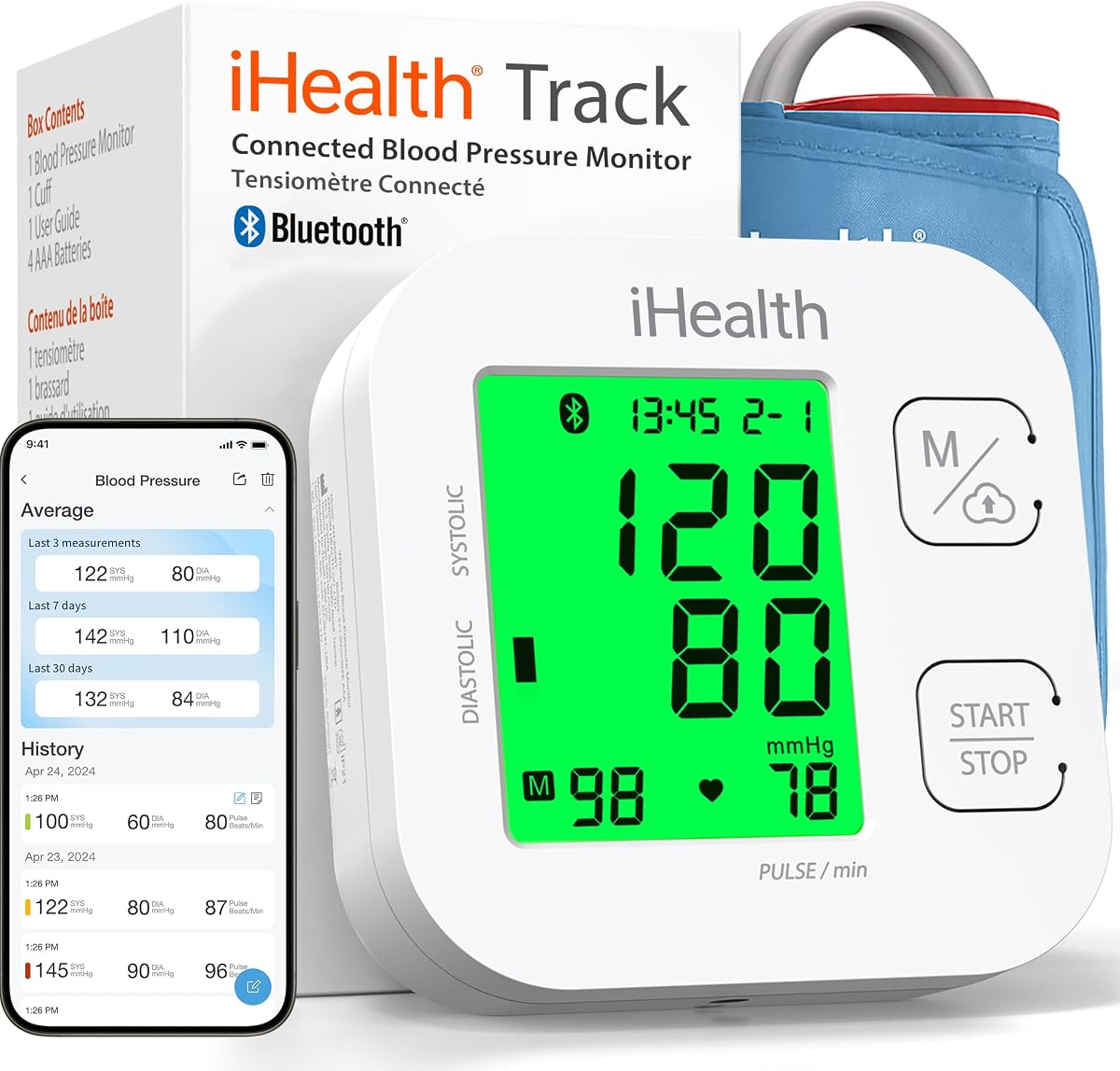
The iHealth Track is a smart upper-arm monitor built around uncomplicated operation, a large backlit display, and capable smartphone integration. With a 4.4 rating, it stands out for combining everyday convenience with features that are often reserved for more advanced connected monitors. Its two-button design minimizes the learning curve without taking useful feedback away.
We may earn a commission when you buy through this link, at no additional cost to you.
The oversized display uses green, yellow, and red cues to help users interpret each result. It can hold 99 readings directly on the device, while the iHealth apps for iOS and Android support unlimited smartphone storage. A warning symbol appears when the monitor identifies a heart rhythm disturbance, giving users information they can discuss with a healthcare professional.
The included wide-range cuff accommodates upper arms measuring 8.7 to 16.5 inches, or 22 to 42 centimeters. That broad range is useful for a household rather than only one user. The trade-off is dependence on a compatible phone and Bluetooth 4.0 or later, plus the need to read the manual carefully before the first measurement.
This is a strong choice for anyone who wants a monitor that is quick to operate but also capable of revealing longer-term trends. It particularly suits people already comfortable using a smartphone for health records. For users who need a straightforward display-only device with no app, one of the one-button upper-arm alternatives may be easier.
Large numbers and a multicolored backlit screen make the reading easy to locate and interpret, including in dim rooms. The color coding provides a quick visual cue without replacing the numeric result.
Phone syncing removes the need to manually transfer readings and allows unlimited storage in the iHealth apps. This is particularly valuable for monitoring changes over weeks or sharing records during a healthcare appointment.
We may earn a commission when you buy through this link, at no additional cost to you.
The Sinocare monitor offers one of the most direct paths to a reading: wrap the cuff, sit correctly, and press one button. Its 4.3 rating reflects a balanced feature set that includes a large 3.6-inch display, posture detection, color-coded classification, and irregular-heartbeat alerts. It is a strong fit for users who want useful feedback without a complicated interface.
We may earn a commission when you buy through this link, at no additional cost to you.
The stated cuff-pressure accuracy is plus or minus 3 mmHg, while pulse-rate accuracy is within plus or minus 5 percent. The adjustable arm cuff fits upper arms from 8.6 to 16.5 inches. Two profiles each support up to 99 stored readings, making it practical for couples or family members who want separate histories on the same device.
Power can come from four AAA batteries or the Type-C port, which is helpful at home or while traveling. However, the package does not include a Type-C cable, and there is no app connection. Those limitations reduce convenience for people who want cloud storage but also make the monitor self-contained and uncomplicated.
Choose this model if the priority is a large display, one-button operation, and useful on-screen coaching. It is also well suited to users who may struggle with smaller screens. Someone seeking extensive digital history and physician-ready reports may prefer a Bluetooth-capable monitor instead.
The 3.6-inch display provides generous room for the systolic, diastolic, and pulse information. Clear digits and color-coded indicators make the result approachable for older adults or anyone with limited vision.
Posture detection can identify positioning problems during a reading. This feedback helps users correct technique instead of simply repeating the measurement without understanding what changed.
We may earn a commission when you buy through this link, at no additional cost to you.
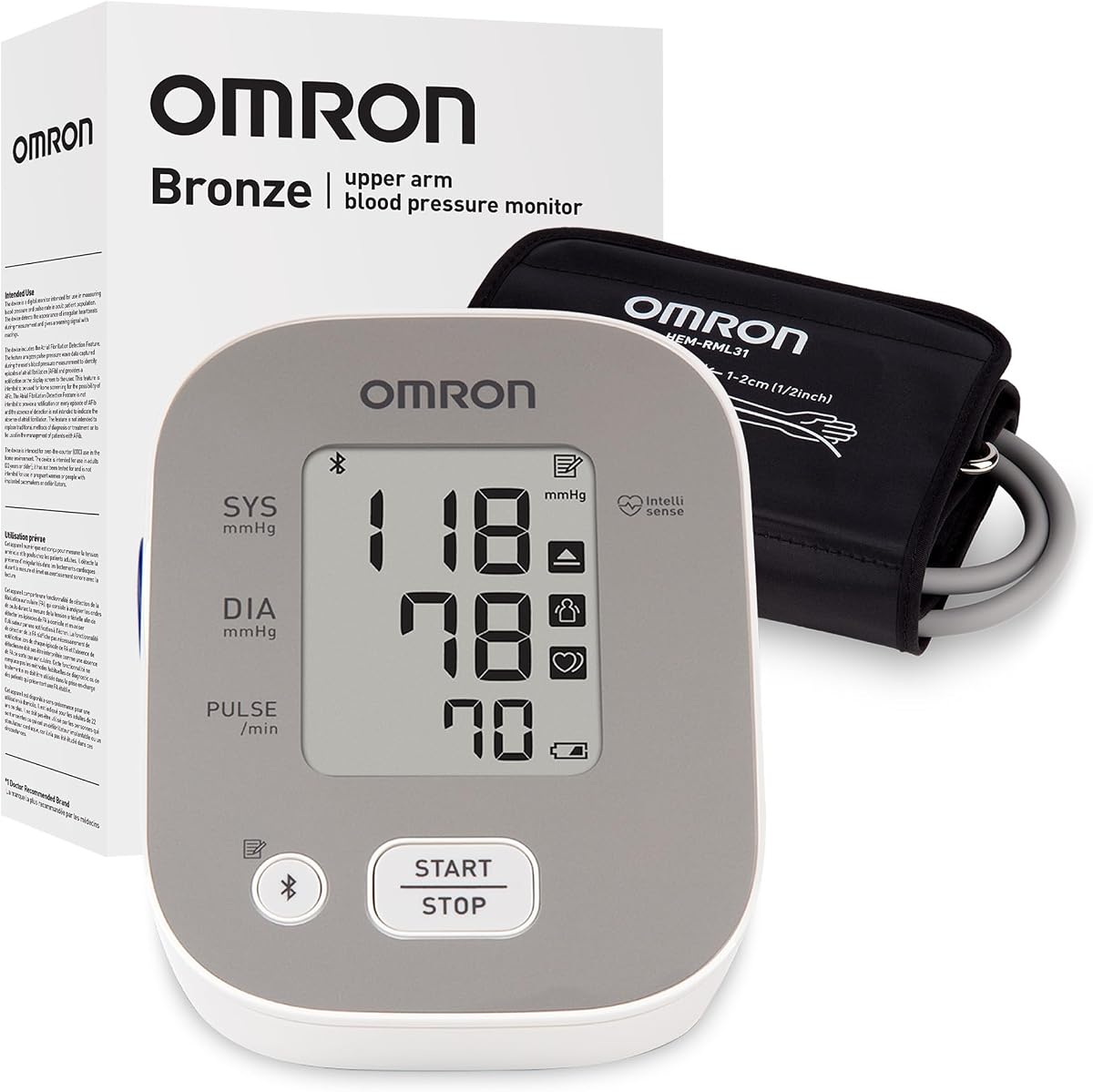
The OMRON Bronze combines approachable home monitoring with the connectivity and reporting tools expected from a premium upper-arm model. It carries a 4.5 rating, matching the highest customer-rating figure in this group. Its appeal lies in a balanced package: familiar cuff-based measurement, automatic alerts, and direct synchronization with the OMRON connect app.
We may earn a commission when you buy through this link, at no additional cost to you.
Bluetooth connectivity allows users to store unlimited readings in the app, monitor trends, and share reports with a doctor. Compatibility with Apple Health and Google Fit expands the ways records can become part of a broader health routine. The monitor also provides irregular-heartbeat detection and a hypertension indicator, turning individual readings into more meaningful health information.
The wide-range D-ring cuff fits upper arms from 9 to 17 inches. The package includes the monitor, cuff, storage case, instruction manual, quick-start guide, and four AA batteries. On-device memory holds 14 readings, which is enough for brief intervals but much less convenient than the app-based storage.
This monitor is a strong recommendation for people who want dependable upper-arm measurement and organized digital records. It may be overkill for someone who only wants a large screen and one-button readings, but it is especially appealing to users who regularly review trends or share information with healthcare professionals.
The OMRON connect app turns individual measurements into a searchable history and supports report sharing. Unlimited app storage solves the limitations of the relatively compact onboard memory.
Irregular-heartbeat detection and hypertension indicators make the device more than a number generator. These warnings are intended to support follow-up with a healthcare professional rather than diagnose a condition by themselves.
We may earn a commission when you buy through this link, at no additional cost to you.
The Oklar Upper Arm focuses on a short, familiar measurement routine. It uses a single button, a backlit LED screen, and an adjustable cuff to keep daily use approachable. Its 4.3 rating suggests a well-regarded balance of simplicity and family-friendly storage, with results available within one minute.
We may earn a commission when you buy through this link, at no additional cost to you.
The monitor supports two users and stores 120 readings for each profile, providing 240 readings in total. The cuff accommodates upper arms from 8.7 to 15.7 inches, or 22 to 40 centimeters. These features make it useful for shared household use as long as both users have compatible arm sizes.
Its dual power arrangement is unusual and practical: three AA batteries can be used normally, or the supplied Type-C cable can power the monitor when no batteries are installed. The product is not rechargeable, so the Type-C connection is a power alternative rather than an onboard battery system.
Pick this monitor when uncomplicated controls, separate user profiles, and flexible power matter more than app connectivity. It is a sensible choice for people who want the device to work during a power interruption or who dislike relying entirely on a phone.
Separate 120-reading profiles reduce the chance of mixing household data. The generous memory allows users to follow changes over time without transferring records to another device.
Battery and Type-C operation make the monitor adaptable to different homes and routines. Users can choose the power method that is most convenient without changing the measurement process.
We may earn a commission when you buy through this link, at no additional cost to you.
The Alcedo Upper Arm pairs one-button operation with several features that help improve the consistency of home readings. It has a 4.5 rating, placing it alongside the OMRON Bronze among the highest-rated monitors here. A clear LCD, live voice broadcast, and automatic averaging of three values make it particularly approachable for routine family use.
We may earn a commission when you buy through this link, at no additional cost to you.
Self-checking features visually flag cuff-position problems and movement during measurement. Instead of asking users to remember every technique, the monitor points out common errors before the result is accepted. The wide-range cuff fits upper arms from 8.7 to 16.5 inches, and the ergonomic shape is designed for straightforward wrapping.
Two users can each store 120 readings, while adjustable voice output speaks the blood-pressure levels. The audio feature can be helpful for users with impaired vision, though it may be unnecessary or disruptive for others who prefer a silent device.
This monitor is a good option for readers who value technique assistance and simple operation over wireless data sharing. It is also FSA/HSA eligible according to the product information, which may be relevant to people using eligible healthcare accounts. Those considering reimbursement should confirm current eligibility and documentation requirements.
Cuff-position and movement detection support more consistent measurement. The visual symbols tell the user when setup or stillness may have compromised the reading.
Automatic averaging of three values can produce a more stable summary than relying on a single measurement. It also gives users a repeatable routine to follow each time.
We may earn a commission when you buy through this link, at no additional cost to you.
The Oklar Rechargeable Wrist is designed for people who want a small monitor and prefer spoken or clearly illuminated results. It has a 4.3 rating and uses a one-button process that produces a reading in about 35 seconds. The compact wrist format and rechargeable battery are particularly convenient for frequent travel.
We may earn a commission when you buy through this link, at no additional cost to you.
The display is large, backlit, and easy to read in low light. Voice broadcast announces the result, and users can adjust the volume or switch the sound off with the SET and MEM buttons. This gives the device flexibility for different preferences rather than forcing one accessibility approach on every user.
The adjustable wrist cuff fits 4.92 to 8.46 inches. It stores up to 240 readings across two user profiles. A built-in rechargeable battery and Type-C cable remove the need for disposable batteries, although a charging adapter is not included in the package.
Choose this model if portability, rechargeable convenience, and voice guidance are priorities. Wrist monitors require the cuff to sit correctly at heart level, so users should follow the positioning instructions carefully. People with larger upper arms or those who find wrist pressure uncomfortable may prefer an upper-arm alternative.
The rechargeable wrist format avoids disposable batteries and occupies less space than a standard upper-arm setup. It is well suited to monitoring while away from home or during frequent travel.
A large backlit display and adjustable voice broadcast offer complementary ways to receive results. Users who do not want audio can disable it, while those who benefit from spoken guidance can keep it active.
We may earn a commission when you buy through this link, at no additional cost to you.
The Oklar Wrist monitor puts fast, automated measurement in a compact format. Its 4.2 rating reflects a feature-rich design centered on one-button operation, a 35-second measurement process, and a large LED backlit display. It is a practical option for travelers and for users who want fewer controls than a connected upper-arm model offers.
We may earn a commission when you buy through this link, at no additional cost to you.
Voice broadcast is especially useful for people with poor eyesight. Volume can be adjusted or the sound can be turned off using the SET and MEM buttons, allowing the monitor to serve different household members with different preferences. The adjustable cuff spans 4.92 to 8.46 inches and helps create a secure wrist fit.
The built-in rechargeable battery and included Type-C cable support repeated use without disposable batteries. Two users can store up to 240 readings, and the device automatically turns off after 60 seconds of inactivity. A charging adapter is not included, so buyers should already have a suitable adapter or use another compatible charging setup.
This wrist monitor is a good fit when portability and rechargeable operation matter most. Correct wrist placement at heart level remains essential to a dependable result. Buyers who prefer a standard upper-arm cuff or need app-based record sharing should consider other options in the guide.
A single button starts the full measurement process, and results are produced in about 35 seconds. Automatic shutoff further reduces unnecessary interaction after the reading is complete.
The dual-user system can organize up to 240 readings across two profiles. This prevents one person’s history from being confused with another’s during routine checks.
We may earn a commission when you buy through this link, at no additional cost to you.
The FDA Cleared Wrist Monitor is an accessible option for users who appreciate spoken measurements and a straightforward one-button process. Its 4.3 rating reflects a device that combines a large LCD, a voice function, rechargeable power, and two-user memory without requiring a smartphone.
We may earn a commission when you buy through this link, at no additional cost to you.
The female voice announces high pressure, low pressure, and heartbeat information after a reading, and the manual explains how to disable audio if preferred. One-button operation is complemented by a simple wrist-wearing process, with results shown on the LCD within one minute.
Each of two users can store 90 readings. The rechargeable wrist cuff uses USB charging, and a storage box and USB cable are included. The product information notes that a full charge usually takes two to three hours when connected through a notebook, power bank, or similar source.
Choose this monitor for simple spoken and visual feedback, particularly if an easy-to-follow interface is more important than automatic data syncing. The included case improves portability. As with any wrist monitor, the cuff must be positioned correctly and the wrist held at heart level during measurement.
Large digits and voice output make results available through two channels. This is useful for users who have difficulty reading small displays or want confirmation of a reading without carefully inspecting the screen.
Rechargeable power eliminates disposable batteries, while the included storage box protects the monitor during transport. The compact wrist format is convenient for a carry-on or overnight bag.
We may earn a commission when you buy through this link, at no additional cost to you.
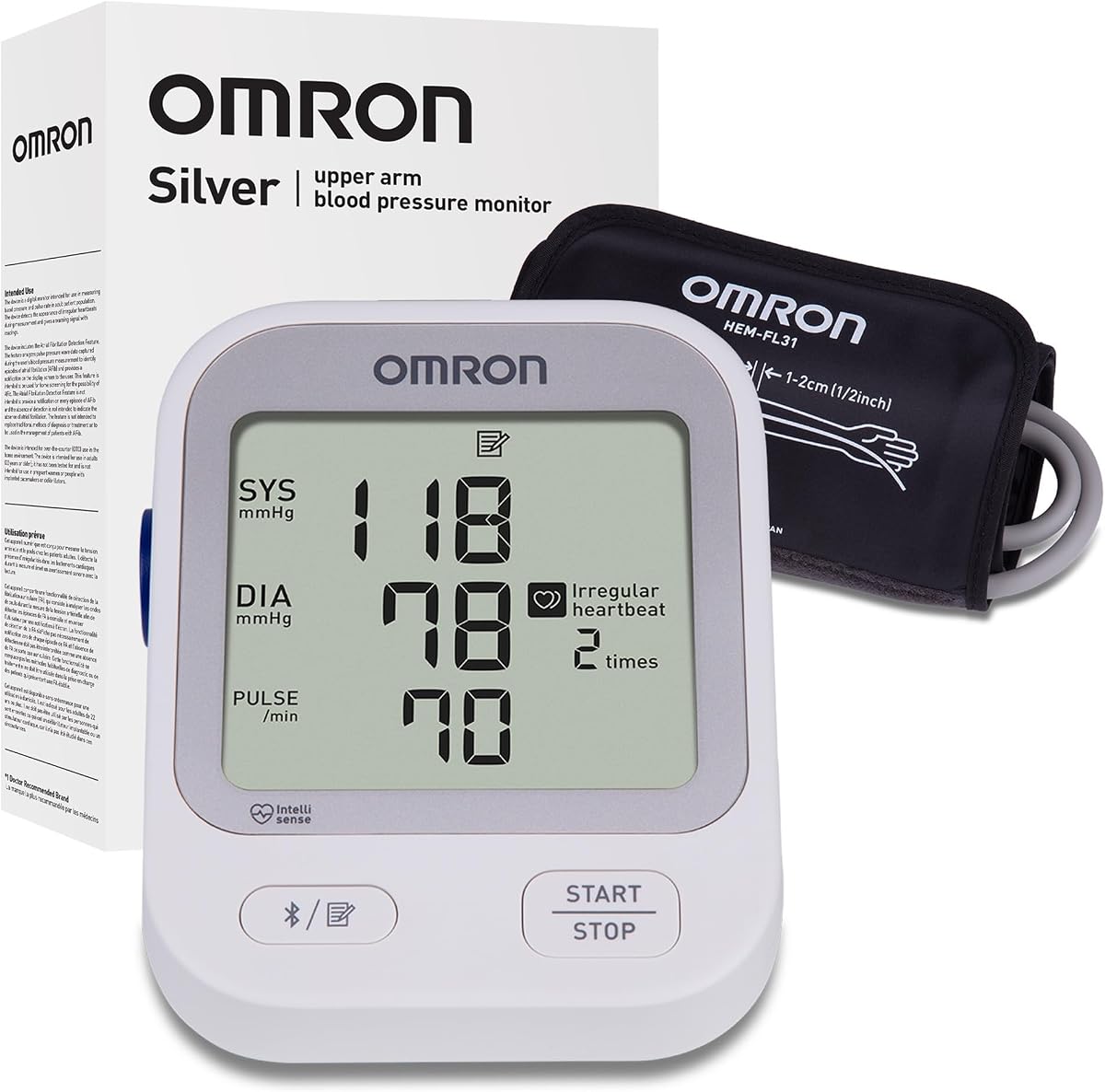
The OMRON Silver blends familiar upper-arm monitoring with a more generous 30-reading onboard memory. It has a 4.3 rating and adds Bluetooth connectivity, irregular-heartbeat detection, and a hypertension indicator. Compared with basic one-button monitors, it is better suited to users who want local history plus organized digital tracking.
We may earn a commission when you buy through this link, at no additional cost to you.
The free OMRON connect app supports unlimited blood pressure records, trend review, and report sharing. Compatibility with Apple Health and Google Fit means measurements can fit into a broader health-data ecosystem. The monitor stores 30 readings directly, offering a useful buffer when the phone is nearby or syncing is delayed.
The easy-wrap ComFit cuff fits upper arms from 9 to 17 inches. A storage case, instruction manual, quick-start guide, and four AA batteries are included, so the package is ready for regular home use or travel. The cuff design is intended to simplify wrapping and support a comfortable fit.
This is a good choice for a connected user who wants more onboard memory than lower-cost monitors provide. It lacks a stated dual-user mode, so households sharing one unit should create separate user profiles in the app. The device is less suitable for anyone who wants a large voice-guided display or a rechargeable wrist format.
Unlimited app storage supports long-term trend analysis, while 30 onboard readings preserve a useful local history. Users can move from quick screen checks to deeper review without losing records.
The easy-wrap cuff and broad 9-to-17-inch range simplify setup for many adults. A storage case and quick-start guide make the monitor straightforward to organize at home or pack for travel.
We may earn a commission when you buy through this link, at no additional cost to you.
The iHealth Neo is a slim, rechargeable upper-arm monitor designed for people who want simple operation and digital records. Its 4.2 rating reflects a useful mix of one-button control, gentle inflation, Bluetooth syncing, and app-based data management. The thin profile is a notable advantage for travel compared with bulkier full-size units.
We may earn a commission when you buy through this link, at no additional cost to you.
A 950mAh rechargeable lithium battery provides up to 130 measurements on a full charge. The large display presents results in 30 to 60 seconds, and the device is described as clinically validated and in conformance with relevant certification standards. No calibration is required according to the product information.
Readings sync in real time with the MyVitals app through Bluetooth 4.0. The app provides unlimited storage and can export data as CSV, XLS, or PDF files, making it convenient to organize records or share them with a doctor. The monitor requires a compatible phone, so it is less suitable for users who prefer a completely standalone device.
Choose the iHealth Neo for compact construction, rechargeable convenience, and flexible record exporting. It is a strong option for travelers and data-oriented users. Buyers who need voice guidance, a large wrist-style display, or multiple onboard user profiles should weigh one of the dedicated two-user or voice-broadcast models instead.
The slim housing and gentle inflation approach prioritize comfort and portability. It is a practical upper-arm option for people who find traditional monitors too bulky.
CSV, XLS, and PDF export options make it easy to retain records in different formats. This adds flexibility when preparing information for personal tracking or a healthcare appointment.
We may earn a commission when you buy through this link, at no additional cost to you.
Ease of use depends on more than a simple start button. Cuff fit, readable feedback, measurement technique, power, storage, and connectivity all influence whether a monitor will become part of a consistent routine.
Upper-arm monitors generally use the format most people recognize and are often easier to position consistently. They are a practical first choice for household use, particularly when more than one person needs a wide arm-cuff range. Wrist monitors are smaller and often easier to carry, but their readings depend more heavily on keeping the wrist positioned correctly at heart level.
Choose an upper-arm model if accuracy, familiar technique, and broad cuff fit are priorities. Choose a wrist model if compact storage, rechargeable portability, or voice-guided readings matter more.
A cuff that is too small can feel restrictive, while one that is too loose may not inflate evenly around the arm. Review the stated circumference carefully and compare it with the measurement of the intended user. Wide-range cuffs are more accommodating for families, but they still need to sit correctly and be positioned on bare skin.
Prioritize a comfortable range that includes your arm size and a cuff shape that is easy to wrap. A secure fit is more important than a feature that is never used because the cuff is awkward.
Large digits, strong backlighting, and color-coded status indicators improve readability, especially for older adults. Voice broadcast can be helpful for users with impaired vision, but it may be unnecessary for others. Models with adjustable volume or an option to disable speech offer a better compromise for shared households.
Select a screen that is large enough to read without effort and confirm that important values are presented clearly. Add voice guidance only when it provides genuine accessibility or convenience.
A monitor can help prevent poor technique by detecting movement, incorrect cuff placement, or improper positioning. Some models also identify irregular heartbeats or show hypertension indicators. These features do not replace medical advice, but they can encourage a more careful routine and flag information worth discussing with a clinician.
Look for posture or movement prompts if another household member may struggle with the setup. Alert features are most useful when you understand what they mean and know when to seek professional guidance.
One-button operation is among the clearest indicators of an easy interface, although users still need to position the cuff correctly. Dual-user modes separate readings for two people and prevent data from becoming mixed. The number of stored readings matters for users who want to review a trend without immediately opening an app.
Prioritize one-button operation and separate profiles when the device will be shared. Confirm the memory capacity per user, not just the total figure advertised for the device.
Rechargeable monitors reduce the need to carry disposable batteries, while models that accept both batteries and USB can remain usable during an outage. Wrist formats and thin upper-arm models are easiest to pack for travel. Check whether the necessary charging cable or adapter is included, because some devices list a Type-C port without providing every accessory.
Choose rechargeable power for frequent travel and battery power for simplicity or uninterrupted use. Avoid making a decision based only on the charging label; verify the complete package contents and expected charging time.
Onboard memory is useful for quick review, but it may be limited to a small number of readings. Bluetooth models can synchronize with an app, maintain longer histories, and provide reports that are easier to share. Compatibility with health platforms can further support routine tracking, although a smartphone and compatible operating system are required.
Choose app connectivity when long-term trend review and data sharing are important. Choose a standalone design when simplicity, independence from a phone, and straightforward family use are the main goals.
Compare the stated accuracy specifications, applicable standards, and regulatory status offered by the manufacturer. Clinical validation, no-need-to-calibrate claims, and specific error tolerances can help distinguish the information provided, but they do not guarantee that every user will obtain the same result. Correct positioning and repeatable technique remain essential.
Review the stated measurements and certification information before buying, and keep the instruction manual available. A monitor records what it measures; it does not diagnose hypertension or other health conditions.
Read the manual before the first measurement, especially to learn how to position the cuff, select a user profile, and interpret prompts or alerts. Sit comfortably with your back supported, feet flat on the floor, and arm resting at approximately heart level. Avoid crossing your legs, talking, or moving during the measurement, and use the arm on which readings are normally taken.
Fit the cuff on bare skin and make sure it is snug, aligned with the marked artery indicator, and high enough on the upper arm. For a wrist monitor, place the cuff where it fits comfortably and hold the wrist at heart level with the palm facing upward. Start the measurement, remain still, and wait until the result appears before moving or adjusting the device.
Record readings as directed by your healthcare professional and compare them over time rather than relying on one isolated result. Clean the cuff and monitor according to the manual, avoid moisture around electronic parts, and replace batteries on a schedule or recharge the unit as directed. If results seem consistently unusual or symptoms are concerning, contact a qualified healthcare professional rather than attempting to diagnose the issue yourself.
Upper-arm monitors are usually easier to measure correctly because the cuff inflates around the upper arm and the arm can rest naturally at heart level. Wrist monitors are more compact but require the wrist to remain raised and positioned correctly. People who travel frequently may prefer a wrist model, while many home users find the upper-arm format more familiar.
Large digits, a bright backlit display, simple controls, and optional voice broadcast can make results easier to access. Dual-user profiles are useful when a partner or caregiver takes readings. The cuff should also be easy to wrap and should fit comfortably, since complicated setup can lead to positioning errors even on a device with a simple button.
Bluetooth is helpful if you want long-term trend records, easy report sharing, or integration with services such as Apple Health and Google Fit. It is not necessary for basic daily measurements, and connected monitors usually require a compatible smartphone. A standalone model can be simpler for users who only want to see the latest result and consult a short on-device history.
The useful amount depends on how often you measure and whether you sync to an app. Around 30 to 60 readings on the device provides a practical local history for many routines, while 90 to 240 is useful for longer intervals or multiple users. App-connected monitors can provide effectively unlimited history, making compact onboard memory less important.
Voice broadcast can make the result easier for someone with limited vision, but it does not improve measurement accuracy by itself. Accuracy depends on correct cuff placement, a supported resting position, stillness during inflation, and repeated technique. Anyone using voice guidance should still confirm the numeric result when possible.
Rechargeable monitors are convenient for frequent travel and reduce recurring battery purchases. Battery-powered models are simpler to maintain and can remain usable during a power outage. Some upper-arm monitors support both options, which offers flexibility, but check whether the product is genuinely rechargeable or whether its Type-C port is only an alternative power input.
Only if the model has a dual-user mode, and both users should select the correct profile before measuring. Separate profiles keep histories from being mixed. You should also verify the cuff range, because a device may support two users only when both arms fall within the stated size.
Check that you followed the correct positioning and cuff-fit instructions, then repeat the measurement after remaining quietly seated and rested. Continue following the guidance provided by your healthcare professional about when to seek care. A home monitor is a tracking tool, and an isolated reading should not be used on its own to diagnose a medical condition.
The iHealth Track is the strongest all-around option for users who want a simple upper-arm monitor with meaningful color cues, irregular-heartbeat warnings, and extensive smartphone tracking. The Sinocare is ideal for anyone prioritizing one-button operation, a very large screen, posture feedback, and separate family profiles, while the OMRON Bronze suits users who want premium connected features and detailed reports.
Prioritize the factors that affect your routine rather than choosing solely by feature count. Upper-arm models offer familiar placement and broad cuff options, wrist monitors improve portability, voice features help certain users, and connected apps make long-term review easier. Also consider cuff range, memory per user, included charging accessories, and whether a smartphone is part of the setup you actually want.
Before making a final decision, check the current product listing, package contents, warranty information, and compatibility requirements. Features and included accessories can vary over time, and keeping the manual nearby will help you use whichever monitor you choose correctly. A consistent routine supported by the right cuff fit and clear results is the foundation of useful home monitoring.