
MbH Lactate Meter Kit
5.0Editor score
Five-second testing
Bluetooth and USB-C
Thousand-entry memory
This guide compares 10 leading lactate meter testing kits across speed, sample size, accuracy, connectivity, strip supply, portability, storage, and athlete
A lactate meter testing kit gives athletes, coaches, and fitness professionals a direct way to track blood lactate during exercise. The right kit balances fast results, small blood samples, dependable strips, readable displays, data storage, and a workflow that remains practical in a gym, on a track, or during coached testing.
This guide compares ten meters and strip packages using the specifications supplied for each product. It focuses on testing time, sample volume, measurement range, included accessories, connectivity, memory, portability, strip packaging, and storage requirements rather than treating any single specification as proof of overall performance.
Each review explains what the product is best suited for, along with its most important trade-offs. The top selections favor strong feature balance, useful connectivity, and practical test-strip availability, while detailed notes help readers distinguish a complete starter kit from a meter upgrade or a strip refill.
5.0Editor score
4.8Editor score

4.3Editor score
This side-by-side comparison highlights the main differences in testing speed, sample size, strip quantity, connectivity, memory, measurement range, and portability. It also identifies the products that are complete meters, bundled kits, or strip-only accessories.


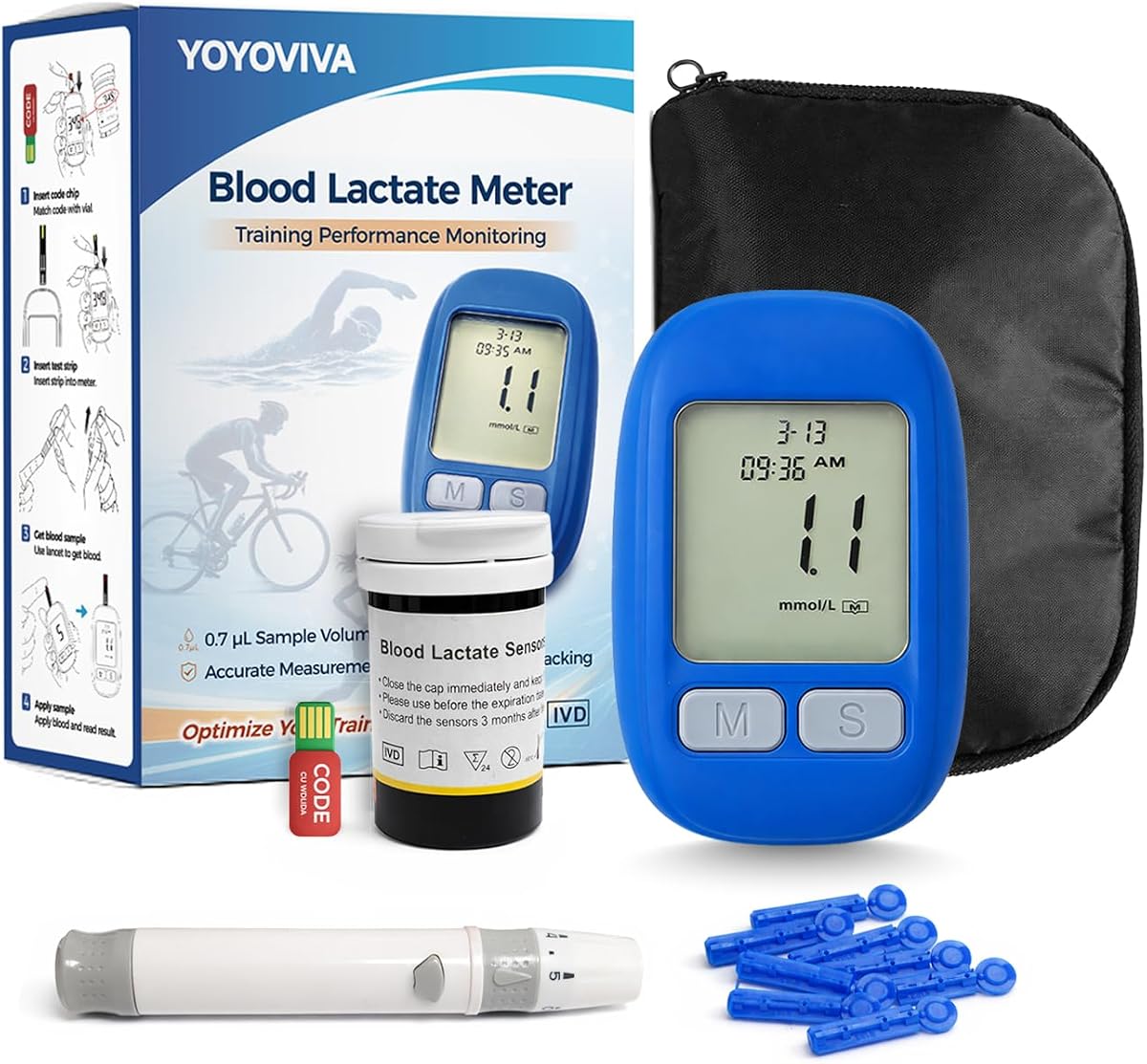


This meter combines a complete sports-testing setup with the largest explicitly stated strip bundle among the leading connected options. Its 4.3 rating reflects a practical balance of useful features, although the supplied data does not establish how it compares with every competitor on absolute measurement accuracy.
We may earn a commission when you buy through this link, at no additional cost to you.
The meter produces a result 10 seconds after a 0.8 µL fingertip sample, making it well suited to tracking lactate alongside pace, power, or perceived effort. Its measurement range extends from 0.5 to 28.0 mmol/L. Bluetooth syncing, stored results, and a compatible mobile app support post-session review, while automatic capillary sampling reduces the active portion of the finger-prick procedure.
The kit includes 50 gold-electrode strips, a code chip, a storage bag, and a warranty card. It does not include the two AAA alkaline batteries required to power the device, and the code chip must match the strip batch when first used or when a new batch is introduced. Those are small setup considerations rather than limitations on routine performance.
This is a strong choice for runners, cyclists, coaches, and triathletes who want both connected data and a generous initial strip supply. It is particularly useful for anyone who expects to collect several measurements across multiple sessions without immediately replenishing consumables.
A 0.8 µL sample and 10-second result time create a straightforward field-testing workflow. The meter automatically draws the sample from the strip tip, helping users focus on consistent finger-prick collection rather than complicated transfer steps.
Bluetooth syncing allows readings to move to a compatible mobile app, while onboard storage keeps results available for later comparison. This makes the kit useful for athletes who want to examine changes across repeated sessions instead of relying on isolated numbers.
We may earn a commission when you buy through this link, at no additional cost to you.
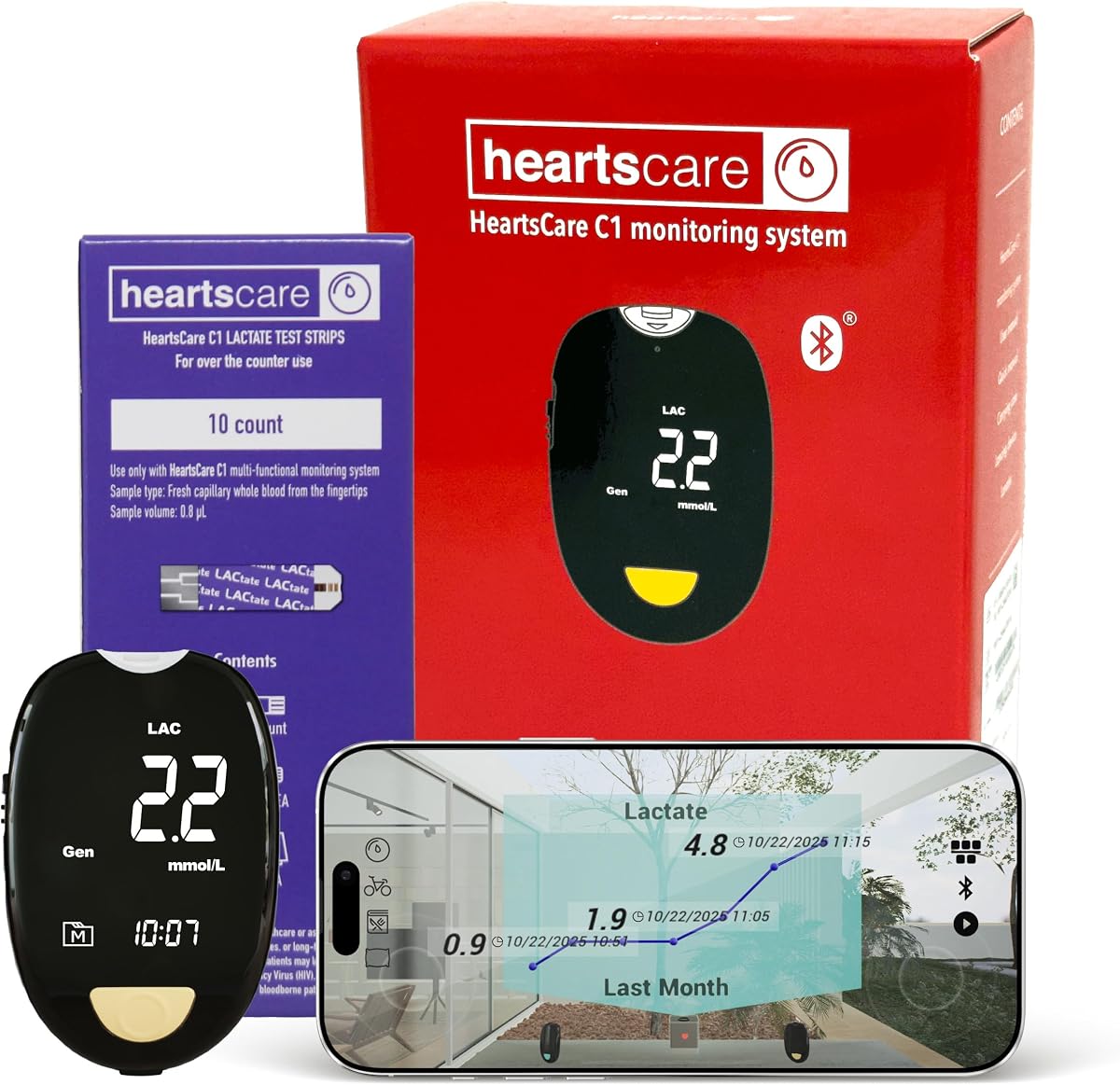
This HeartsCare kit pairs a very short testing time with a connected sports-performance workflow. Its 4.8 rating is among the strongest listed results, and the combination of five-second readings, 0.8 µL samples, and app integration makes it an appealing all-around choice for athletes testing themselves or coaches organizing structured sessions.
We may earn a commission when you buy through this link, at no additional cost to you.
The meter uses gold-coated strips with laser engraving technology and measures from 0.3 to 22 mmol/L. Free 3D Performance Bluetooth app integration adds a data-management layer, while individually packaged strips are intended to improve storage stability. The stated room-temperature storage range is 35.6 to 86 degrees Fahrenheit, or 2 to 30 degrees Celsius.
Ten strips make this a compact starter configuration rather than a long-term supply. A lifetime meter replacement and complimentary replacement of expired strips with the next strip order are listed, but buyers should still understand the original strip quantity and confirm the current terms of that program before making a decision.
It is best suited to athletes who value quick feedback and connected tracking more than a large initial strip allocation. Coaches who routinely work with multiple clients may find the 50-strip version more convenient, but this kit remains a strong general-purpose starting point.
A five-second result is especially useful when a coach wants to measure several points during a workout. The short workflow makes it easier to relate lactate to changes in pace, power, or interval effort while the session is still in progress.
Individually packaged strips help limit exposure to the environment during storage. Keeping them within the specified temperature range remains important, and each opened strip should be handled according to the accompanying instructions.
We may earn a commission when you buy through this link, at no additional cost to you.
This THE EDGE package is built around a straightforward proposition: provide the meter, a meaningful strip supply, and the lancets needed to begin collecting fingertip samples. Its 4.2 rating indicates a generally positive reception, while the bundled 30 strips offer more room for repeated testing than a minimal starter set.
We may earn a commission when you buy through this link, at no additional cost to you.
The primary kit contains the lactate meter, five test strips, and five lancets. An additional box of 25 strips brings the total to 30. That arrangement can be convenient for athletes who want several test points in hand, along with enough lancets for a starter routine without needing a separate accessory purchase.
The supplied information highlights an easy three-step operation and industry-leading accuracy, but it does not provide a numeric testing time, sample volume, measurement range, or memory capacity. It also does not identify Bluetooth or other connectivity. That makes direct technical comparison with the 5- and 10-second models less precise.
This kit is a practical choice for someone seeking a clearly bundled meter-and-strip package with lancets included. Buyers who prioritize app connectivity, quantified test speed, or a documented measurement range should compare those specifications carefully before settling on this model.
Including five lancets removes a common accessory gap for new users. The additional strip box also makes it easier to plan several measurements without starting with only a handful of consumables.
The three-step workflow may appeal to users who want a meter that is not surrounded by unnecessary complexity. As with any fingertip device, consistent technique and clear instructions remain essential for meaningful trend monitoring.
We may earn a commission when you buy through this link, at no additional cost to you.
The MbH kit stands out for combining five-second results, extensive memory, and two connection options. Its 5.0 rating is the highest numeric rating in the group, although ratings alone do not verify measurement precision or every aspect of long-term reliability.
We may earn a commission when you buy through this link, at no additional cost to you.
The TD-4261 meter uses XPER technology, described as gold coating with laser engraving, and measures a 0.8 µL sample in five seconds. It can sync as many as 1,000 data sets to a smartphone app through Bluetooth or USB-C. That storage capacity is particularly useful for athletes who want to retain long training histories and examine lactate trends.
This configuration is a meter-focused kit rather than a fully stocked starter bundle. Individually foil-wrapped test strips are sold separately, and the product uses two AAA batteries that are not included. The body weighs 50.2 grams, which supports portability, although the separate strip requirement adds an important ownership consideration.
It is best for an athlete or coach who values data capacity and flexible syncing, already owns compatible strips, or intends to build a repeatable testing system over time. First-time buyers should account for the extra consumable and battery needs before choosing it.
A 1,000-entry memory capacity gives the meter more room to retain results than many compact competitors. Combined with app syncing, it supports both immediate review and longer-term comparison of training responses.
Bluetooth supports convenient wireless transfer, while USB-C provides an alternate wired route. Having both options can make the meter easier to incorporate into different coaching and data-management routines.
We may earn a commission when you buy through this link, at no additional cost to you.
This compact THE EDGE meter is a straightforward option for athletes who value portability, simple controls, and the ability to recall previous readings. Its 4.1 rating is solid, although its longer testing time and larger sample requirement make it less competitive for rapid in-session protocols.
We may earn a commission when you buy through this link, at no additional cost to you.
The meter requires a 3 µL sample and produces a result in 45 seconds. Results can be displayed in mmol/L or mg/dL, while memory recall covers up to 300 tests. The larger sample may be less demanding to collect for some users, but it is not the smallest finger-prick volume among the featured products.
Temperature management is especially important for this model because its strips are sensitive to heat, direct sunlight, and freezing. The specified storage range is 39 to 86 degrees Fahrenheit. The manufacturer notes that inconsistent back-to-back results may indicate compromised strips caused by improper storage.
This meter is best suited to less time-sensitive testing and users who prefer a simple handheld device with local memory. Athletes wanting immediate feedback during intervals should weigh the 45-second wait, while buyers should plan carefully around strip storage conditions.
The small handheld format and uncomplicated operation make the meter approachable for routine home or gym-based monitoring. It does not need app connectivity to provide a locally stored history of up to 300 readings.
Support for mmol/L and mg/dL can make results easier to record for users who work with different measurement conventions. The display unit should still be checked before comparing numbers entered into a training log.
We may earn a commission when you buy through this link, at no additional cost to you.
This 20-strip HeartsCare configuration provides a useful middle ground between a minimal starter package and a larger strip bundle. Its 5.0 rating is especially strong, and the documented five-second test time makes it appealing for athletes who want immediate feedback during training.
We may earn a commission when you buy through this link, at no additional cost to you.
The meter accepts a 0.8 µL sample and measures between 0.3 and 22 mmol/L. Gold coating, laser engraving, and individually packaged strips form the core technology and storage approach. Strips are intended for room-temperature storage between 35.6 and 86 degrees Fahrenheit.
The listing does not mention Bluetooth app integration, which distinguishes it from the 10-strip HeartsCare model. It also provides fewer initial strips than the 50-strip version, so a user conducting frequent testing may need to replenish consumables sooner. The stated lifetime meter replacement and complimentary expired-strip replacement offer added support.
This kit is best for athletes prioritizing quick results, small samples, and a moderate initial supply. It is a particularly sensible middle option for someone who wants more strips than the entry configuration but does not need the largest bundled inventory.
Twenty strips support several testing sessions and a variety of planned measurement points. This gives new users more room to learn the collection process while avoiding the largest commitment of a 50-strip bundle.
The listed lifetime meter replacement and complimentary expired-strip replacement can add confidence after purchase. Buyers should confirm current eligibility and program terms directly with the seller.
We may earn a commission when you buy through this link, at no additional cost to you.
This HeartsCare version combines the same quick-testing platform with 50 strips and Bluetooth app integration. Because no numeric customer rating is available for this listing, the product should be evaluated primarily from its stated specifications and the reputation of the broader kit line.
We may earn a commission when you buy through this link, at no additional cost to you.
A 0.8 µL sample produces a result in five seconds, and the measurement range runs from 0.3 to 22 mmol/L. The free 3D Performance app provides a connected way to review results, while individually packaged strips are designed to support stable storage.
Fifty strips make this the most sustained supply among the clearly bundled HeartsCare options. That makes it well suited to coaches conducting repeated athlete assessments or athletes who expect frequent testing. Users must still store strips between 35.6 and 86 degrees Fahrenheit and protect them from damaging conditions.
It is a logical choice for high-frequency users who want speed, connectivity, and fewer immediate refill decisions. Those who test only occasionally may find a smaller strip bundle easier to manage, while anyone using the app should confirm that the current free software offer remains available.
A 50-strip inventory reduces the frequency of replenishment for frequent testers. It is a practical advantage for a coach conducting multiple sessions each week or an athlete following a detailed monitoring schedule.
Five-second results keep the meter relevant during active training, while Bluetooth adds a path for organizing measurements after collection. Together, these features suit users who want speed and a digital record in one device.
We may earn a commission when you buy through this link, at no additional cost to you.
This portable meter is clearly designed around endurance training, with a 4.7 rating and a workflow centered on fast readings, simple operation, and trend monitoring. Its 0.8 µL sample and approximately 10-second result time make it practical for use before, during, or after a workout.
We may earn a commission when you buy through this link, at no additional cost to you.
The meter powers on automatically when a test strip is inserted, reducing the number of steps required to begin a test. Biosensor-based electrochemical technology and temperature compensation are intended to provide stable, repeatable readings for observing changes over time, while built-in memory keeps prior results available on the device.
The product is specified for sports-performance tracking, and the title indicates that test strips and lancets are included. The supplied data does not provide a precise strip count, Bluetooth capability, measurement range, or exact memory capacity, so those details should be confirmed before purchase.
It is a good fit for runners, cyclists, and coaches who want a simple portable meter rather than a heavily connected system. Buyers should verify the contents and compatibility of the supplied consumables, especially if they already own a meter from another brand.
Automatic activation through strip insertion eliminates a separate startup step. The resulting workflow is easy to learn, which can be valuable during busy track sessions or gym workouts.
Temperature compensation and onboard memory support repeatability and trend observation. The meter is best used to understand changes in an individual rather than as an isolated absolute score.
We may earn a commission when you buy through this link, at no additional cost to you.
This is a refill pack rather than a complete lactate meter testing kit, but it is important for anyone who already owns a compatible THE EDGE device. Its 4.0 rating applies to the strip pack, and the package contains 25 individually usable lactate test strips.
We may earn a commission when you buy through this link, at no additional cost to you.
Compatibility is the central advantage. These strips are designed specifically for THE EDGE Lactate Meter, which reduces the uncertainty associated with generic strips and meters that may use different sensors, calibration systems, or code configurations.
Temperature control is essential. The strips should be stored between 39 and 86 degrees Fahrenheit and protected from heat, direct sunlight, and freezing. The product information specifically notes that inconsistent results during back-to-back testing can indicate that strips have deteriorated because of improper storage.
This pack is best for existing THE EDGE owners who need a replenishment. It is not a suitable standalone purchase for someone without a compatible meter, and buyers should check the device model and instructions before ordering.
Using strips designed for a specific meter reduces compatibility risk. Users should still confirm that the meter model matches and follow all instructions supplied with the strips and device.
Proper storage helps preserve strip performance. Avoid heat, direct sunlight, and freezing, and inspect the package before use if it has been stored for an extended period.
We may earn a commission when you buy through this link, at no additional cost to you.
This 50-count strip pack offers a substantial consumable supply and carries a 5.0 rating. It uses gold-electrode technology and requires only 0.8 µL of blood per test, with a stated result time of 10 seconds when used in a compatible analyzer.
We may earn a commission when you buy through this link, at no additional cost to you.
The product is marketed for athletes, coaches, and laboratories and is compatible with Eaglenos lactate analyzers and similar models. That wider compatibility is useful, but it should not be interpreted as universal. Buyers need to confirm that their specific meter accepts these strips and does not require a different calibration chip or coding method.
The listed operating environment spans 59 to 95 degrees Fahrenheit, 10% to 85% relative humidity without condensation, and 70 to 106.6 kPa atmospheric pressure. These conditions cover many indoor and outdoor settings, although extreme heat, cold, condensation, or high-altitude conditions may fall outside the stated operating range.
This pack is best for owners of a compatible high-frequency analyzer who want 50 tests on hand. It is not a complete kit because no meter is included, and it should be purchased only after confirming device and strip-code compatibility.
Fifty strips reduce the need for frequent repurchases. The pack is particularly useful for coaches or labs that perform several measurements each day with compatible equipment.
The documented temperature, humidity, and pressure limits help define where the strips are intended to operate. Keeping the unopened pack within those conditions supports dependable use.
We may earn a commission when you buy through this link, at no additional cost to you.
The most useful lactate meter is one that matches the user's testing schedule, environment, experience level, and data-management needs. Speed, sample collection, consumables, storage, and compatibility deserve more attention than marketing language alone.
Testing time can shape how a lactate meter is used during exercise. Five-second devices such as the MbH, 20-strip HeartsCare, and 10-strip HeartsCare can support rapid feedback between intervals, while 10-second options may still work well for planned checks. The 45-second THE EDGE model is more appropriate when immediate feedback is less important. Athletes should consider whether they need a reading during a hard effort, after a workout, or only at scheduled testing points.
A smaller sample can be easier to collect and may reduce discomfort, particularly for frequent testing. The MbH, athlete-focused meter, and connected kits use a stated 0.8 µL sample, while THE EDGE uses 3 µL. Sample size should be considered together with finger-prick technique, lancet depth, and user comfort rather than treated as the only measure of usability.
A broad measurement range can provide more room for records during intense exertion. The featured 50-strip Bluetooth meter covers 0.5 to 28.0 mmol/L, while the HeartsCare kits list 0.3 to 22 mmol/L. Consumers should also confirm the unit used by the display or app and keep that unit consistent when comparing results over time.
Connectivity determines how easily results move from the meter to a phone, computer, or coaching platform. Bluetooth-equipped products offer wireless syncing, while the MbH model also supports USB-C and stores up to 1,000 data sets. THE EDGE provides local recall for 300 results, and the portable athlete model has built-in memory without stated app integration. The right choice depends on whether a digital log is essential or local history is sufficient.
Test strips are the ongoing consumable, so their quantity and compatibility can matter more than the meter at the time of purchase. Complete kits range from 10 to 50 strips, while the MbH meter requires strips separately. Refill packs can save money for existing owners, but only when the device is explicitly compatible. Users should verify model names, strip coding, and code-chip requirements rather than assuming all lactate strips are interchangeable.
Individually packaged strips can improve protection against moisture and environmental exposure. HeartsCare meters and the MbH model emphasize individual wrapping, but storage temperature still matters. Recommended ranges vary by product, and heat, direct sunlight, and freezing can damage strips. Buyers who train outdoors or carry meters through changing conditions should plan a stable storage solution.
A compact meter is easier to carry to a track, gym, or coached session. The MbH body weighs 50.2 grams, while the other featured products are described as small, handheld, or portable. Power requirements also matter: the MbH and 50-strip Bluetooth meter use two AAA batteries, which are not included in the stated kit contents. Users should keep spare batteries available and follow the device instructions for installation.
A complete kit can include strips, lancets, a code chip, a storage bag, a warranty card, and a manual. THE EDGE 30-Strip kit notably includes five lancets, while the 50-strip Bluetooth kit includes a storage bag and code chip. HeartsCare also lists a lifetime meter replacement and complimentary replacement of expired strips with the next order, though buyers should confirm current terms. Accessories and support can meaningfully affect the total ownership experience.
Begin by reading the manual for the specific meter and confirming that the test strips match its model and batch code. Wash and dry the hands, prepare the lancet and strip as directed, and use a consistent fingertip collection technique. Some models require a code chip during initial setup, while others handle configuration through their own menu or app. Keeping the workflow identical across sessions makes trends easier to interpret.
Power on the meter and insert the strip only when the instructions call for it. Collect the stated sample volume, apply it to the strip as instructed, and wait for the result to stabilize. Record the reading with the workout context, including time, pace, power, heart rate, perceived exertion, and the point in the session when the sample was taken. A lactate value is more useful when paired with the activity that produced it.
For care, remove used strips according to the device instructions, dispose of lancets safely, and clean the meter without immersing it or directing liquid into openings. Store the meter in its pouch or a dry case, keep unopened strips within the specified temperature range, and carry spare batteries when required. Periodic repeat tests can help reveal technique or consumable issues, but persistent unusual readings should prompt a check of strip storage, expiration status, and device instructions.
No. Lactate strips are often designed for specific meter models, sensor systems, and coding methods. The EDGE refill is explicitly intended for THE EDGE meters, while the 50-count gold-electrode pack is described as compatible with Eaglenos analyzers and similar models. Always confirm the meter model, strip designation, and code-chip requirements before purchasing replacement strips.
The best testing time depends on the workout and the number of measurements being taken. Five-second meters are helpful for rapid checks between intervals, while 10-second devices remain practical for planned monitoring. A 45-second meter may be sufficient when testing is not time-sensitive. The important factor is whether the result arrives early enough to support the athlete's decision-making process.
It can. Products using a 0.8 µL sample require less blood than the 3 µL THE EDGE configuration, which may be preferable for frequent fingertip testing. Comfort also depends on finger-prick technique, lancet selection, and how consistently the user collects the sample. Proper technique matters as much as the nominal sample volume.
No. Bluetooth is useful for syncing readings to a smartphone app, but several meters provide local result memory for users who prefer standalone tracking. Athletes should choose connectivity based on whether they want automated data transfer, team dashboards, or long-term trend analysis. A connected meter adds convenience without replacing the need for sound collection technique.
Follow the temperature range stated for the specific strip product. The listed requirements include avoiding heat, direct sunlight, and freezing, while individually wrapped packaging can help protect unused strips from moisture. A stable, dry storage location is important. Damaged or poorly stored strips may produce inconsistent readings even when the meter itself is working correctly.
A single reading is best treated as one point in a broader testing pattern. Lactate varies with exercise intensity, timing, recovery, hydration, temperature, and collection technique. Repeated measurements collected under similar conditions can be more informative, especially when paired with pace, power, heart rate, and perceived effort.
A complete kit is usually more convenient for a first-time buyer because it reduces the need to find compatible consumables. A meter with separate strips may work well for an experienced owner who already has the right supplies. In either case, verify the strip model, storage requirements, and expected number of tests before ordering.
First check whether the test strips were stored within their specified temperature range and whether they have deteriorated. Then review sample collection, code-chip setup, and the displayed units. Run a new strip using consistent technique rather than repeatedly using the same questionable consumable. Persistent unusual results should be addressed through the manufacturer's support resources or a qualified healthcare professional.
The MbH Lactate Meter Kit is the strongest feature-focused selection for buyers who prioritize five-second results, extensive memory, and both Bluetooth and USB-C syncing. The HeartsCare 10-Strip Kit stands out for rapid connected testing and app integration, while the 50-Strip Bluetooth Lactate Meter offers a generous strip bundle, a ten-second workflow, and useful onboard history.
Before choosing, match the meter to the way it will be used. Frequent interval testing favors a five- or ten-second design, regular monitoring favors adequate strips and convenient storage, and coaching workflows may make app syncing more valuable than a larger onboard memory. Model-specific strip compatibility, sample size, measurement range, and included lancets should all be checked before finalizing a purchase.
Marketplace listings, software offers, accessories, and warranty terms can change over time. Review the current product page, package contents, instructions, and compatibility information before ordering, especially when purchasing a strip refill or relying on a connected app or replacement program.
