
Built-in GPS Distance Tracking Watch
4.2Editor score
Phone-free GPS tracking
Waterproof swim mode
Week-long heavy-use battery
Distance Tracker for Running guide compares 10 GPS watches and pedometers for accuracy, battery life, training insights, comfort, and value for runners.
A distance tracker for running should make every run easier to understand by recording pace, mileage, heart rate, routes, and workout progress without distracting you. The right device depends on whether you want simple step counting, dependable standalone GPS, detailed recovery analysis, or navigation for long-distance routes.
We compared all ten products using the supplied specifications, focusing on location tracking, running features, battery life, display quality, health metrics, connectivity, water resistance, and ease of use. The guide includes dedicated running watches, multipurpose fitness trackers, lightweight GPS devices, and a simple clip-on pedometer.
Each selection reveals a different approach to measuring movement, from basic distance records to advanced training guidance. The top picks represent an approachable all-rounder, a feature-rich premium option, and a lower-cost way to begin tracking runs, while current availability and feature details may change over time.
4.2Editor score

4.6Editor score

4.6Editor score
This side-by-side comparison highlights each device's core tracking method, battery endurance, running features, and connectivity so runners can find the right balance of capability and simplicity.


The Garmin Forerunner 165 is a well-balanced distance tracker for runners who want credible GPS measurements, clear workout data, and useful training guidance without moving into specialist multisport equipment. Its 4.6 rating reflects a generally strong combination of ease of use, battery life, and running-focused features.
We may earn a commission when you buy through this link, at no additional cost to you.
Built-in GPS records pace and distance, while wrist-based heart rate gives a convenient view of effort. The 43mm AMOLED touchscreen remains readable during runs, and traditional buttons help users who prefer not to swipe through every function. Battery life reaches up to 11 days in smartwatch mode and up to 19 hours with GPS active, which suits regular training schedules.
The watch also provides personalized daily suggested workouts, Garmin Coach plans, race-adaptive options, training effect, and recovery time. These features are more useful than simple step totals for runners trying to follow a progression. The principal limitation is that it does not include the onboard maps and advanced running-dynamics data found on higher-tier Garmin models.
This is a strong recommendation for a new runner, a fitness-focused runner, or anyone who wants a dependable everyday watch with dedicated GPS. Choose the Forerunner 70 if a longer training battery and broader activity list matter more, or the Forerunner 965 if navigation and performance metrics justify a more advanced device.
Personalized daily workouts adapt to performance and recovery, while Garmin Coach supports event preparation. This turns the watch from a passive distance recorder into a practical partner for structured training.
The AMOLED screen presents pace, distance, and heart-rate information in a bright, responsive format. Button controls keep essential controls accessible even when the screen is wet or your pace makes touchscreen interaction inconvenient.
We may earn a commission when you buy through this link, at no additional cost to you.
The Built-in GPS Distance Tracking Watch offers one of the broadest combinations of running, outdoor, communication, and health features in this guide. Its 4.2 rating makes it a practical option for runners who want phone-free distance tracking and a large display without spending on a specialist Garmin device.
We may earn a commission when you buy through this link, at no additional cost to you.
Its built-in GPS is intended to lock quickly and record real-time pace, distance, route, and calorie burn, with the best results expected in open outdoor areas. The watch also includes an altimeter, barometer, compass, lap counter, interval timer, and stopwatch, making it useful for both road running and structured workouts.
The 2.06-inch AMOLED display is unusually large for this category and should be easy to read during movement. Battery life is listed at seven days of heavy use, 20 days of light use, and 30 days on standby. A five-atmosphere water-resistance rating adds swim functionality, although the watch is not intended for diving, hot showers, or high-velocity water sports.
Choose this device if you want a capable general-purpose tracker with standalone GPS and numerous modes. It is less appropriate for runners who need sophisticated coaching, detailed recovery modeling, or dependable navigation. Even so, for basic and intermediate runners, it delivers an unusually complete package of tracking and everyday functions.
The integrated GPS means runners can leave their phone behind while still recording pace, distance, and route information. Bluetooth remains available for notifications and hands-free calls when a compatible phone is nearby.
Swim tracking, hiking, biking, emergency calling, weather displays, music control, and outdoor navigation tools extend the device beyond the running field. Two included bands and a unisex design also make it adaptable to different preferences.
We may earn a commission when you buy through this link, at no additional cost to you.
The Garmin Forerunner 70 is a compact running smartwatch that combines built-in GPS with adaptive training, recovery monitoring, and a generous activity library. Its 4.4 rating indicates a solid feature set for runners who want more structured guidance than a basic fitness tracker provides.
We may earn a commission when you buy through this link, at no additional cost to you.
GPS handles pace and distance, and wrist-based heart rate tracks effort without requiring a chest strap. The 43mm case is described as lightweight, while an AMOLED touchscreen combines modern readability with familiar button controls. Up to 13 days of smartwatch battery and 23 hours of GPS runtime give it a meaningful edge for frequent runners.
Training readiness combines sleep quality, recovery, training load, and HRV status to indicate whether the wearer is prepared for a productive session. Personalized suggested workouts, quick workout creation, training status, training effect, and recovery time make this more than a basic mileage counter. The supplied information notes that wearable health and recovery measurements are close estimates rather than clinical readings.
The Forerunner 70 is a compelling fit for runners who want a compact watch, long battery life, and adaptive plans. Choose it over the Forerunner 165 when broader activity profiles and a longer GPS runtime are priorities. If you require full-color maps or detailed running mechanics, the Forerunner 965 is the more advanced alternative.
Training readiness and recovery estimates help runners decide whether a planned session is appropriate. The guidance is best treated as one input alongside personal experience, workload, and how the athlete actually feels.
Garmin Coach includes beginner-friendly run-and-walk options as well as higher-volume and higher-intensity plans. The quick workout feature also lets users create a running session by desired duration and intensity directly from the watch.
We may earn a commission when you buy through this link, at no additional cost to you.
The Zeacool Fitness Tracker is designed more as an affordable, general-purpose activity tracker than a dedicated GPS running watch. Its 4.5 rating is favorable for users who value a broad collection of wellness metrics, a colorful display, and simple everyday operation.
We may earn a commission when you buy through this link, at no additional cost to you.
The tracker records steps, distance, calorie consumption, and exercise time through selectable sports modes in the Da Fit app. It also monitors heart rate, blood oxygen, sleep stages, temperature, stress-related information, and other daily health data. A sleep score provides a simple summary of time spent in deep sleep, light sleep, and awake stages.
Its 1.47-inch AMOLED HD touchscreen is smaller than some competing fitness watches, helping it maintain a more restrained profile. The IP68 rating supports use during handwashing, bathing, swimming, and rain exposure. Regular battery life is listed at 10 to 14 days, with standby extending to 30 days and magnetic fast charging included.
This model suits casual runners and fitness enthusiasts who want a general health wearable with distance tracking. It is not the strongest choice for pace mapping, standalone route capture, or advanced running analysis because the supplied specifications do not mention built-in GPS. Runners needing those functions should choose a dedicated GPS watch.
Continuous heart-rate, blood-oxygen, sleep, and activity monitoring provide useful context around training. These measures can help runners notice broad lifestyle patterns without replacing a medical device or professional assessment.
Sport modes are selected in the Da Fit app, where daily health data is recorded and reviewed. The tracker is compatible with both iPhone and Android smartphones, making it a flexible option for mixed-device households.
We may earn a commission when you buy through this link, at no additional cost to you.
The Garmin Forerunner 965 is the most technically advanced distance tracker in this roundup, combining premium navigation, multisport tools, and detailed running analytics. Its 4.6 rating reflects a high level of performance for serious runners, travelers, and endurance athletes who want more than pace and distance.
We may earn a commission when you buy through this link, at no additional cost to you.
Full-color built-in maps and multi-band GPS with SatIQ technology support confident route following and improved positioning in challenging environments. The lightweight titanium bezel surrounds a bright AMOLED touchscreen, and battery life reaches up to 23 days in smartwatch mode and 31 hours in GPS mode, combining high capability with practical endurance.
Training readiness, training status, training effect, recovery time, HRV status, and personalized daily workouts create a detailed picture of training load. The device also records cadence, stride length, ground contact time, and wrist-based running power. For racers, a race widget can use course information entered in Garmin Connect to support strategy and daily workout adjustments.
This is the strongest recommendation for an experienced runner who values navigation and performance analytics. It is less likely to be necessary for someone beginning a simple run/walk routine, and its larger 47mm case may feel substantial on smaller wrists. Budget-conscious buyers should examine the Forerunner 165 or 70 instead.
Full-color onboard maps allow runners to follow routes directly from the watch. Multi-band GNSS is particularly relevant around tall buildings, dense trees, and other places where a conventional receiver may struggle.
Wrist-based running power, cadence, stride length, and ground-contact time can reveal changes in technique and loading. These measurements are best interpreted as training feedback rather than absolute laboratory results.
We may earn a commission when you buy through this link, at no additional cost to you.
The Garmin Forerunner 570 stands out with a 4.8 rating, the highest in the group, and a feature set focused on bright displays, connected functions, and personalized training. It is a compelling option for runners who want more everyday smartwatch capability than a basic tracker without moving to the Forerunner 965 tier.
We may earn a commission when you buy through this link, at no additional cost to you.
Built-in GPS, wrist-based heart rate, and an AMOLED touchscreen provide the essential running experience. The 47mm aluminum-bezel design is described as Garmin's brightest AMOLED display in this model line, improving readability in direct sunlight. Battery life reaches up to 11 days in smartwatch mode and 18 hours with GPS active.
Garmin Coach plans, training readiness, training status, VO2 max, and adaptive daily workouts offer solid guidance for progressive training. A built-in microphone and speaker support wrist calls, while a paired smartphone can provide voice-assistant responses and help with replying to messages. Morning and evening reports summarize sleep, recovery, training outlook, HRV, readiness, weather, and planned workouts.
The Forerunner 570 is well suited to social runners, commuters, and fitness-focused athletes who want phone conveniences alongside running metrics. Its 47mm proportions may feel large, and its GPS battery is shorter than the Forerunner 965's. Those trade-offs are reasonable for a watch centered on brightness, connectivity, and adaptive coaching.
The bright AMOLED screen improves visibility in strong daylight, a practical advantage for daytime runs. Traditional button controls provide an alternative when users need to change screens without relying on touch.
Adaptive workout suggestions sit alongside wrist calling and voice-assistant functions. That combination makes the watch useful for daily wear as well as structured training.
We may earn a commission when you buy through this link, at no additional cost to you.
The POLAR Pacer Pro is built around the idea that a running watch should be light, focused, and able to last through a long training day. Its 4.3 rating suits runners who prioritize low weight and endurance over a large collection of smartwatch applications.
We may earn a commission when you buy through this link, at no additional cost to you.
At 41 grams, the device is designed to feel unobtrusive during long runs. The GPS records time, pace, distance, and laps on a clear color display, while the high-speed processor is designed to process core training information efficiently. Battery life reaches up to 35 hours in training mode, 100 hours in power-save mode, and seven days in watch mode.
Polar Precision Prime optical heart-rate monitoring provides the foundation for sleep and recovery tools intended to improve performance awareness. A built-in training program supports organized progression, and specialized tools cover more than 150 sports. These features make it broader than a pure running watch without becoming as complex as a full smartwatch.
The Pacer Pro is a good match for runners who dislike bulky watches and want a dedicated device with a long GPS runtime. It may be less appealing for people seeking rich notifications, onboard maps, or extensive third-party features. It also offers less explicit detail about display and connectivity than the Garmin selections in this guide.
The 41-gram construction is a central benefit for runners sensitive to watch weight. A lighter device can also sit more comfortably during sleep tracking, recovery monitoring, and long sessions.
Optical heart-rate data supports sleep and recovery tools, giving athletes context beyond immediate pace. These indicators help runners notice fatigue and recovery habits, though they remain estimates of physiological status.
We may earn a commission when you buy through this link, at no additional cost to you.
The Nike+ SportWatch GPS Powered by TomTom is a deliberately focused running watch for people who want speed and distance without a modern smartwatch feature load. Its 3.9 rating is the lowest among the selections, but the core purpose remains clear: uncomplicated GPS tracking for runs.
We may earn a commission when you buy through this link, at no additional cost to you.
TomTom GPS is designed to provide accurate speed and distance information indoors or outdoors and can continue functioning when the GPS signal is interrupted. The water-resistant construction makes it suitable for typical running conditions, while a rechargeable lithium-polymer battery provides up to eight hours of runtime with GPS and the sensor active.
Standby endurance extends to 50 days, which is useful for athletes who do not wear the watch every day. The device focuses on core running functions instead of advanced coaching, recovery analysis, or extensive notifications. That makes it easy to understand and potentially comfortable for users who prefer fewer screens and simpler menus.
The SportWatch is most appropriate for casual runners, Nike+ ecosystem users, or anyone seeking a dedicated tracker with limited complexity. It is not ideal for long ultramarathons because of the shorter active GPS runtime, nor for athletes who want detailed training analysis. A more advanced Garmin or POLAR model offers broader tools.
Concentrating on speed and distance reduces the learning curve and screen clutter. This makes the watch attractive for runners who want their tracker to record a session without becoming a source of distraction.
The TomTom GPS platform is designed to maintain useful information even if the satellite signal is briefly interrupted. That continuity can help preserve basic workout records during tree cover, tall buildings, or other compromised conditions.
We may earn a commission when you buy through this link, at no additional cost to you.
The Garmin vívoactive 5 is a health-and-fitness smartwatch with enough GPS running features to serve as a solid distance tracker for active adults. Its 4.3 rating reflects a balanced mix of wellness monitoring, daily convenience, and approachable sports tracking.
We may earn a commission when you buy through this link, at no additional cost to you.
The 42mm case is smaller than the 47mm Forerunner models, and the bright AMOLED display provides clear color information for running metrics and everyday notifications. Built-in GPS supports more than 30 indoor and outdoor sports applications, including walking, running, cycling, HIIT, swimming, and golf. Battery life reaches up to 11 days in smartwatch mode, or five days with the display always on.
Body Battery energy monitoring, sleep coaching, sleep score, HRV status, morning reports, stress tracking, and menstrual and pregnancy tracking make wellness a central priority. Training features include workout benefit, recovery time, preloaded workouts, custom workouts through Garmin Connect, and free adaptive Garmin Coach plans for running challenges.
This watch is ideal for runners who want one device for activity, sleep, and general wellness rather than a narrowly specialized performance watch. It is less appropriate for serious athletes who prioritize mapped navigation and detailed mechanics. For those priorities, the Forerunner 965 offers a clearer performance-oriented path.
Sleep coaching, energy monitoring, stress tracking, and automatic nap detection add value outside workouts. These features help the watch function as an everyday health companion rather than only a running recorder.
Users can download playlists from Spotify, Amazon Music, or Deezer and connect wireless headphones for phone-free listening. Preloaded cardio, yoga, strength, HIIT, and Pilates workouts broaden its appeal beyond running.
We may earn a commission when you buy through this link, at no additional cost to you.
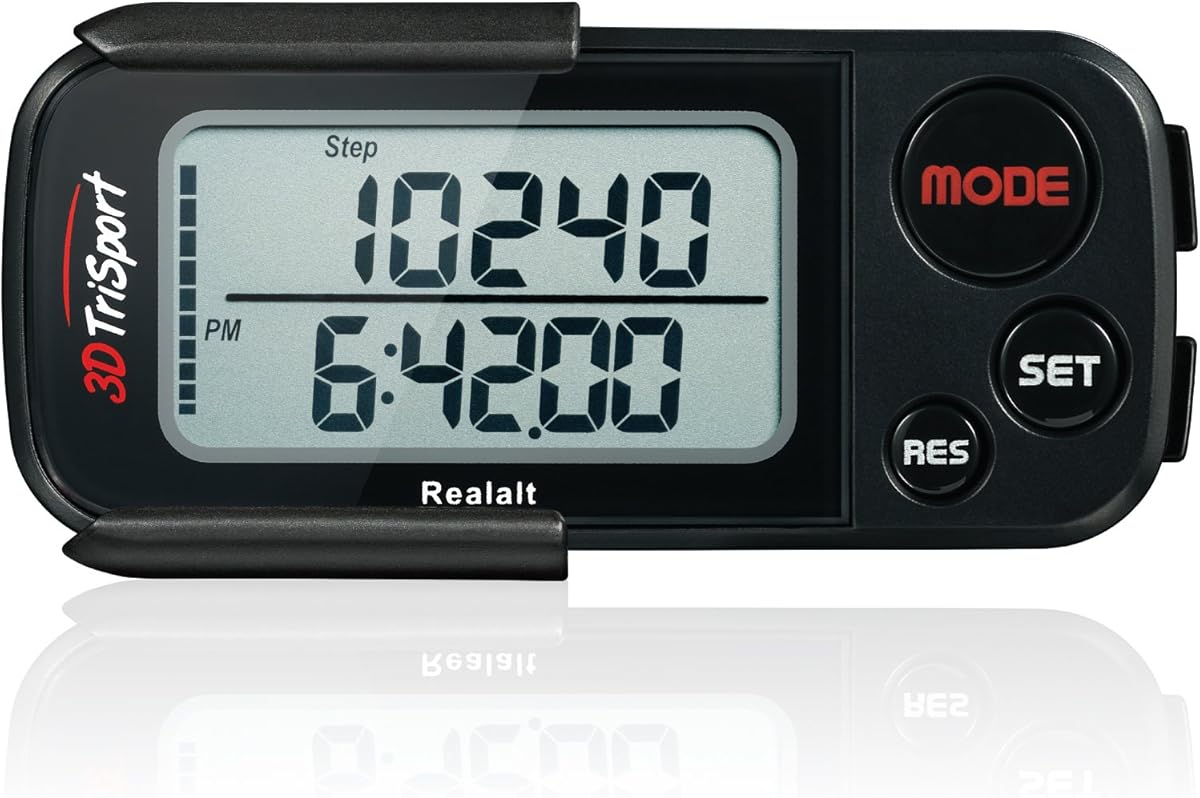
The 3DTriSport Walking Pedometer is the simplest distance-tracking option in this guide, offering step, distance, calorie, and exercise-time records without a smartwatch, subscription, or smartphone connection. Its 4.0 rating reflects a useful device for people who prioritize simplicity and battery life.
We may earn a commission when you buy through this link, at no additional cost to you.
A three-axis sensor tracks activity in multiple positions, allowing the pedometer to be clipped to the waist, worn around the neck with the included lanyard, or carried in a pocket or bag. It records walking and running steps, distance in kilometers or miles, calories burned, and exercise time while storing up to 30 days of daily records.
Setup is intentionally uncomplicated, with no Bluetooth pairing, app downloads, or smartphone connection required. The included support materials and setup videos are designed to help new users begin quickly, while the stated suitability for adults, seniors, and children broadens the potential audience.
This is the right choice for casual activity monitoring, travelers, older adults, or anyone who dislikes charging a regular watch. It is not a serious running computer because it cannot map routes, calculate sophisticated training metrics, or independently capture GPS distance. Runners wanting those functions should select a watch from the upper portion of this list.
The pedometer focuses on step count, distance, calories, and exercise time. This limited scope makes it approachable for users who want basic records rather than a complex training platform.
The included clip, lanyard, and pocket or bag options allow users to find a comfortable and effective position. Consistent placement is important because motion-based estimates can vary when the device shifts.
We may earn a commission when you buy through this link, at no additional cost to you.
The best distance tracker for running depends on measurement accuracy, training depth, battery behavior, comfort, and how much everyday functionality you need. Prioritize the features that directly support your running routine rather than selecting a device simply because it offers the longest list of health metrics.
Built-in GPS generally provides more useful route and distance information than a device that relies only on wrist motion or a paired phone. Dedicated GPS models can record pace, distance, and routes without connectivity, while multi-band systems may perform better around buildings, trees, and other obstructions. Motion-based pedometers are simpler but cannot produce mapped routes.
Choose built-in GPS for independent running records and multi-band positioning for demanding environments. Choose a step sensor when basic distance and activity totals are enough.
Basic trackers may show steps, calories, and elapsed exercise time. Dedicated running watches add pace, distance, heart rate, laps, intervals, recovery, training load, and adaptive workout guidance. More advanced models can also monitor cadence, stride length, ground-contact time, running power, and training effectiveness.
Prioritize the metrics you will actually use. New runners may appreciate guided plans, while experienced athletes may value dynamics and readiness tools.
Battery specifications are most useful when separated into smartwatch mode, GPS mode, and general use. A watch with shorter active GPS endurance may need frequent charging, whereas a model rated for extended training use is more convenient for long runs and frequent travel. Basic pedometers can offer much longer standby life than color smartwatches.
Compare the active mode you will use most. If you run daily and dislike charging, favor long GPS runtime; if the device also serves as an everyday watch, total smartwatch battery life matters.
A readable display is essential for checking pace and distance without interrupting stride. AMOLED screens provide bright color and strong outdoor visibility, while button controls remain useful when the screen is wet or touch input is inconvenient. Larger displays can show more information but may feel bulky on smaller wrists.
Choose a bright screen with large numbers and accessible controls. Consider size and weight carefully if you sleep with the watch or wear it all day.
Heart rate, HRV status, sleep stages, stress, and recovery estimates can reveal how training interacts with daily habits. They are most valuable when reviewed as trends rather than precise medical conclusions. Runners should not treat consumer wearables as diagnostic tools or use them to make safety-critical medical decisions.
Select recovery features if consistent training and sleep awareness are priorities. If basic heart rate and daily activity are enough, a simpler tracker may reduce cost and complexity.
Running in rain and washing the device after workouts require appropriate water resistance. Some devices support swimming, while others are intended only for sweat and rain. Dive ratings, hot-shower exposure, and high-velocity water sports have different limits, so the exact guidance should be checked before exposing the tracker to those conditions.
Match water resistance to your activities. Runners who also swim should favor a clearly documented swim mode and suitable resistance rating.
Bluetooth can deliver calls, texts, weather, music controls, and app notifications, but many watch features still depend on a nearby compatible phone. Standalone GPS works independently of cellular service, which is valuable in remote areas. A pedometer may require no connection at all, making it especially simple to operate.
Decide whether phone-free operation is essential. Choose a standalone GPS watch for remote training, or a non-connected pedometer for minimal setup and maintenance.
A tracker should feel comfortable enough for daily wear and remain stable during vigorous movement. Lightweight cases reduce fatigue, while included bands, clips, and lanyards provide different placement options. Metal bezels and water-resistant housings may suit runners who train in varied conditions.
Try to assess wrist fit and weight when possible. Secure placement matters because loose devices can introduce noise into motion-based measurements.
Begin by charging the device fully, installing the relevant companion app if required, and completing the initial setup. For GPS watches, wait outdoors with a clear view of the sky until the location is acquired. Enter your age, activity preferences, and relevant goals so that heart-rate zones, training guidance, and recovery features have a useful baseline.
Before each run, choose the running profile or correct sport mode, confirm that GPS is active when required, and check that the watch is snug enough to remain stable. Start the workout recording before you begin moving. Review pace, distance, heart rate, and elapsed time while running, then stop and save the session promptly so the data can be synchronized and evaluated.
Clean the watch after every workout with a soft, damp cloth and dry it thoroughly before charging. Keep the charging contacts and case free of dirt, and avoid exposing devices to hot water, harsh chemicals, or conditions outside their water-resistance guidance. Replace the band when it becomes worn, and update the companion app and device software regularly to receive compatible improvements.
Built-in GPS is useful whenever you want distance, pace, and route data without carrying a phone. It also makes recording more reliable in areas with poor cellular service. A basic pedometer can be sufficient for casual activity tracking, but it cannot recreate the route and pace detail provided by a dedicated GPS watch.
Beginners often benefit most from clear pace and distance data, a comfortable fit, and straightforward battery performance. The Garmin Forerunner 165 offers a balanced introduction with suggested workouts, while the Built-in GPS Distance Tracking Watch provides a broader feature set for those who also want swim tracking and phone-free operation. Neither requires users to understand complicated training terminology to begin.
A fitness tracker can work well for casual runners who mainly want steps, distance, calories, and heart rate. A dedicated running watch usually provides more consistent GPS data, better interval tools, richer training metrics, and activity-specific screens. The right choice depends on how much precision and guidance you need.
Accuracy varies with device placement, movement, weather, signal conditions, and individual physiology. GPS-based watches generally provide better route and distance measurements, while optical heart-rate sensors can be affected by movement or fit. Secure, consistent wear improves results, and important conclusions should not be based on a single reading.
Look first at the stated GPS runtime because that is the mode used during a long run. Total smartwatch battery life matters if you also sleep in the watch or wear it for notifications. If you dislike frequent charging, choose a model with long training endurance or a simple pedometer with an extended battery life.
Some models can record GPS workouts completely independently, although notifications, music, safety features, and detailed setup may still rely on a paired phone. The 3DTriSport Walking Pedometer requires no phone connection, while smartwatches such as the Garmin models vary by feature. Check the specific functions you expect to use away from your phone.
It is useful for rain, sweat, and post-run washing. If you regularly swim, choose a model with an explicit swim mode and an appropriate water-resistance rating. Devices intended for swimming may still have restrictions involving diving, hot showers, or high-velocity water sports.
Training and recovery features are valuable if you follow structured plans or want more insight into workload, sleep, and readiness. They are less essential for occasional recreational runs. Treat the readings as estimates and combine them with subjective fatigue, training history, and professional medical advice when relevant.
The Garmin Forerunner 165 is the most balanced overall recommendation because it combines built-in GPS, a clear AMOLED display, heart-rate tracking, adaptive workouts, and practical battery life. The Built-in GPS Distance Tracking Watch offers the strongest budget-oriented balance, while the Garmin Forerunner 965 stands out for premium navigation, multi-band positioning, and advanced running dynamics.
Choose based on your actual routine rather than the number of features. Casual users may be well served by the 3DTriSport Walking Pedometer, health-focused runners may prefer the Garmin vívoactive 5, and athletes seeking a very light dedicated watch may favor the POLAR Pacer Pro. Verify the current specifications, compatibility, fit, and included accessories before making a final decision.
Availability, software behavior, app compatibility, and manufacturer updates can change, so check the current product listing for the latest details. Comparing the live listing against your priorities for GPS accuracy, training depth, comfort, connectivity, and battery endurance will help you select the most suitable distance tracker for running.

